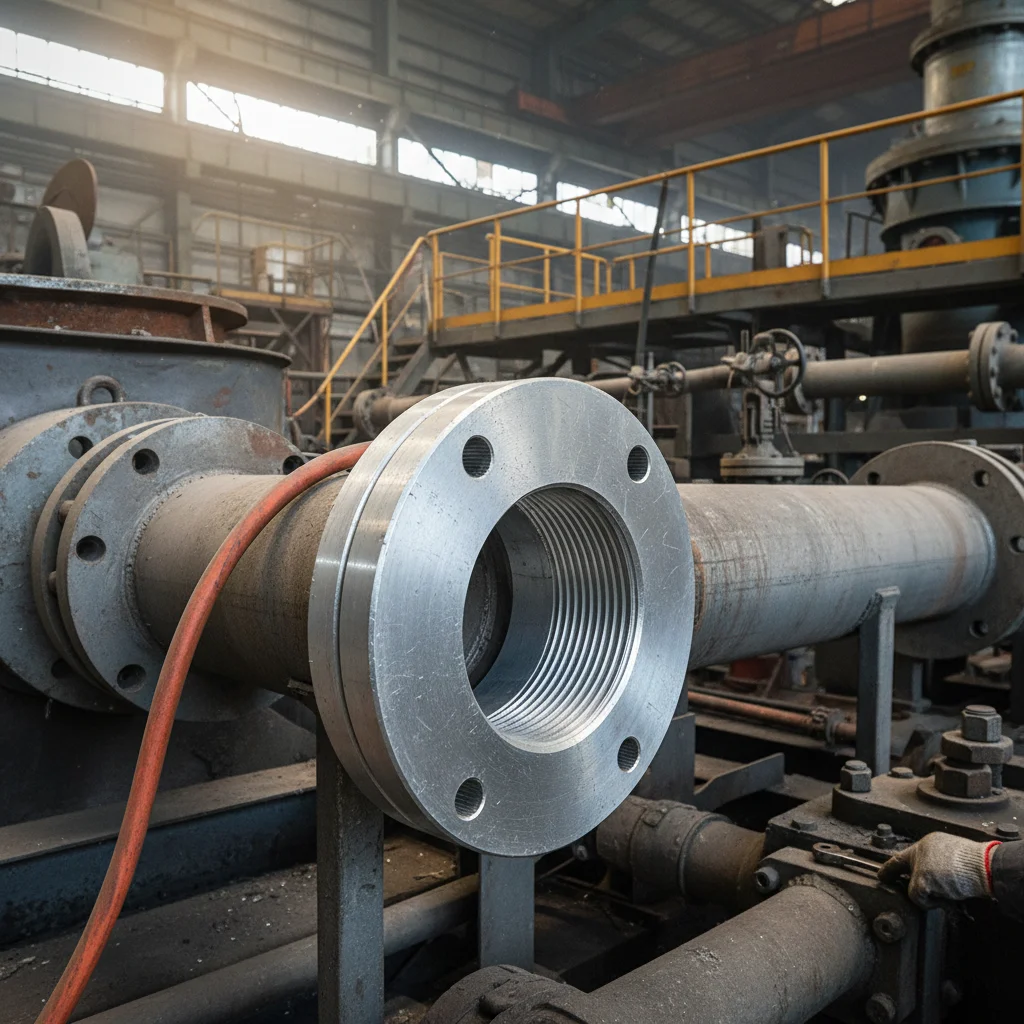
In the complex world of industrial piping, selecting the right connection component is critical for system integrity. The 12 slip on flange serves as a pivotal element in structural metal fabrication, offering a balanced approach to installation efficiency and mechanical reliability. By providing a standardized interface for pipe joining, these components ensure that large-scale industrial networks can be assembled with precision and security.
From a global engineering perspective, the demand for high-quality flanged connections is driven by the expansion of oil, gas, and chemical infrastructure. The 12 slip on flange is particularly valued for its ability to streamline the welding process, reducing the need for precise pipe-end machining while maintaining a robust seal. This makes it an essential component in projects where time-to-completion and cost-effectiveness are as vital as structural strength.
Understanding the nuances of materials, pressure ratings, and ASME standards is essential for any procurement manager or engineer. Whether dealing with corrosive chemical media or high-pressure steam, the correct specification of a 12 slip on flange can prevent catastrophic failures and extend the operational lifespan of the entire piping system. This guide explores the technical depths and practical applications of these critical metal components.

Standardized Design and ASME Compliance of 12 Slip On Flange
The 12 slip on flange is manufactured in strict compliance with the American Society of Mechanical Engineers (ASME) standards. This adherence ensures that key parameters—including outer diameter, bolt circle dimensions, and thickness—remain uniform across different manufacturers. Such standardization is critical for international engineering projects, allowing for seamless interchangeability and simplifying the procurement process.
By following ASME B16.5 and B16.47, the 12 slip on flange guarantees that the component will fit perfectly with matching pipes and gaskets. This eliminates the risk of onsite modifications and reduces installation errors, which is particularly important in high-stakes environments like nuclear power plants or oil refineries where precision is non-negotiable.
Pressure Rating Coverage for 12 Slip On Flange
The operational versatility of the 12 slip on flange is largely defined by its wide pressure rating coverage. According to ASME standards, these flanges are available in various classes, including Class 150, 300, 400, 600, 900, 1500, and 2500. Each class represents the maximum pressure the flange can withstand at a specific temperature, allowing engineers to select the exact component suited for their system's stress levels.
As the pressure class increases, the physical characteristics of the 12 slip on flange change accordingly. Higher ratings correspond to increased flange thickness and more robust bolt specifications to maintain structural integrity. This tiered system ensures that whether a pipeline is transporting low-pressure water or ultra-high-pressure hazardous chemicals, there is a standardized solution available.
Selecting the correct pressure rating is a balance between safety and cost. While a Class 2500 flange provides maximum security, it is often overkill for low-pressure applications. Therefore, the diversity in 12 slip on flange ratings allows for optimized engineering designs that meet safety codes without unnecessarily inflating project budgets.
Diversified Sealing Faces for 12 Slip On Flange
The sealing face of a 12 slip on flange determines how effectively the joint prevents leaks. The most common type is the Raised Face (RF), which concentrates the gasket pressure on a smaller area, offering strong versatility across a wide range of industrial applications and media types.
For more demanding environments, the 12 slip on flange may feature Male-Female Face (MFM) or Tongue-Groove (TG) designs. These faces provide superior sealing performance through tight, interlocking surface-to-surface contact, which is essential for preventing the escape of toxic or flammable gases.
In extreme conditions, such as Class 900 and above, the Ring Joint (RJ) face is utilized for the 12 slip on flange. These achieve a seal via the plastic deformation of a metal ring gasket, making them the ideal choice for high-temperature, high-pressure, and highly corrosive media environments.
Material Selection for 12 Slip On Flange
The material composition of a 12 slip on flange is dictated by the medium it transports and the environmental conditions it faces. Carbon steel, such as A105 for forged applications or A350 LF2 for low-temperature service, provides a cost-effective solution for non-corrosive media. Stainless steels (304, 316, 321) are preferred when oxidation resistance and corrosion protection are required, such as in pharmaceutical or food processing lines.
For the most extreme scenarios, alloy steels and nickel-based alloys are employed. A182 F11/F22 chromium-molybdenum steel is common in high-pressure steam systems, while Hastelloy or Monel are used in extremely harsh chemical environments. The choice of material for the 12 slip on flange directly impacts the system's longevity and safety.
Material Performance Comparison for 12 Slip On Flange
Global Application Scenarios for 12 Slip On Flange
The 12 slip on flange finds extensive use in critical pipeline systems worldwide. In oil and gas exploration, these flanges are used in transportation networks to manage high-pressure fluids. Similarly, in chemical engineering and oil refining, they provide the necessary seals to handle hazardous and toxic media safely.
Beyond energy, the 12 slip on flange is indispensable in power generation—including thermal and nuclear plants—where temperature fluctuations are extreme. It is also widely deployed in shipbuilding, water treatment facilities, and the pharmaceutical industry, ensuring that liquid transport remains contaminant-free and leak-proof.
Core Product Advantages of 12 Slip On Flange
One of the primary advantages of the 12 slip on flange is its exceptional connection strength. By integrating the flange and pipeline into a rigid unit, the system exhibits high resistance to tensile, compressive, and bending forces. This structural rigidity is vital for resisting pipeline thrust and torque caused by vibration or thermal expansion.
Furthermore, the reliability of the sealing performance is a major draw. Through the strategic selection of sealing faces (RF, RJ, etc.) and high-grade gaskets, the 12 slip on flange effectively prevents media leakage. This ensures safe system operation, protecting both the environment and personnel from hazardous leaks.
Finally, the global standardization of the 12 slip on flange reduces project costs and cycles. Because they are compatible with international standards, design selection and maintenance are simplified, allowing for faster repairs and upgrades without needing custom-fabricated parts.
Quality Control and Executive Standards for 12 Slip On Flange
To ensure safety in high-pressure environments, every 12 slip on flange undergoes rigorous quality control. This process begins with the chemical composition analysis of raw materials to ensure they meet ASTM and ASME SA series specifications. Mechanical property testing, including tensile, impact, and hardness tests, confirms the material's ability to withstand operating stresses.
Non-destructive testing (NDT) is also a critical step for the 12 slip on flange. Ultrasonic testing (UT) and magnetic particle testing (MT) are used to inspect the internal quality of forgings and weld joints, ensuring there are no hidden cracks or voids that could lead to failure.
The final stage involves strict dimensional accuracy inspection. Parameters such as the outer diameter, thickness, and bolt hole positions are measured to ensure they align perfectly with ASME B16.5 or B16.47. This comprehensive quality loop ensures that each 12 slip on flange delivered to the customer is safe, reliable, and fully compliant.
Quality Analysis and Compliance Matrix for 12 Slip On Flange
| Testing Method | Objective | Standard | Acceptance Grade |
|---|
| Chemical Analysis | Verify Material Grade | ASTM A105/A182 | 100% Match |
| Ultrasonic Testing | Internal Flaw Detection | ASME Section V | Zero Defects |
| Tensile Testing | Mechanical Strength | ASTM E8 | Pass/Fail |
| Dimensional Check | Fit and Tolerance | ASME B16.5 | +/- 0.5mm |
| Hardness Test | Surface Resistance | Brinell Scale | Within Range |
| Surface Finish | Sealing Face Quality | Ra Value | Smooth/Grooved |
FAQS
The 12 slip on flange slides over the pipe and is welded both inside and outside, making it easier to align and install. In contrast, a weld neck flange is butt-welded to the pipe, providing higher structural strength and better performance in extreme temperature/pressure cycles. Slip-on flanges are typically used for lower pressure ratings compared to weld neck versions.
For corrosive media like acids or salt solutions, Stainless Steel 316L or Duplex Stainless Steel is highly recommended. These materials offer superior oxidation resistance. For extremely harsh environments, nickel-based alloys like Hastelloy provide the highest level of protection against chemical degradation.
The pressure class (e.g., Class 150, 300, 600) should be chosen based on the maximum operating pressure and temperature of your system. You should refer to the ASME B16.5 pressure-temperature ratings table to ensure the flange can safely handle the load without risking deformation or leakage.
A "Raised Face" (RF) refers to a small raised area on the sealing surface of the flange. This design concentrates the clamping force of the bolts onto the gasket, creating a tighter seal. It is the most common sealing face used in general industrial piping.
Yes, provided the correct material and pressure rating are selected. For high-temperature steam, Alloy Steel (such as A182 F11 or F22) is often used because it maintains mechanical properties at elevated temperatures better than standard carbon steel.
You should request a Material Test Report (MTR) which includes chemical analysis and mechanical test results. Additionally, performing a dimensional check against ASME standards and reviewing NDT reports (like UT or MT) will confirm the internal and external quality of the flanges.
Conclusion
The 12 slip on flange stands as a cornerstone of modern industrial piping, blending ease of installation with rigorous ASME-standardized reliability. From the strategic selection of materials like carbon and stainless steel to the precise application of various sealing faces and pressure ratings, these components ensure the safety and efficiency of global infrastructure. By adhering to strict quality control measures and non-destructive testing, manufacturers provide the security needed for the most hazardous industrial environments.
As the industry moves toward more sustainable and automated fabrication processes, the role of standardized components will only grow. Investing in high-quality 12 slip on flange solutions not only reduces immediate installation costs but also minimizes long-term maintenance risks and operational downtime. For those seeking premium flanged solutions that meet international safety codes, exploring certified manufacturing partners is the key to system longevity. Visit our website: www.weihuantube.com