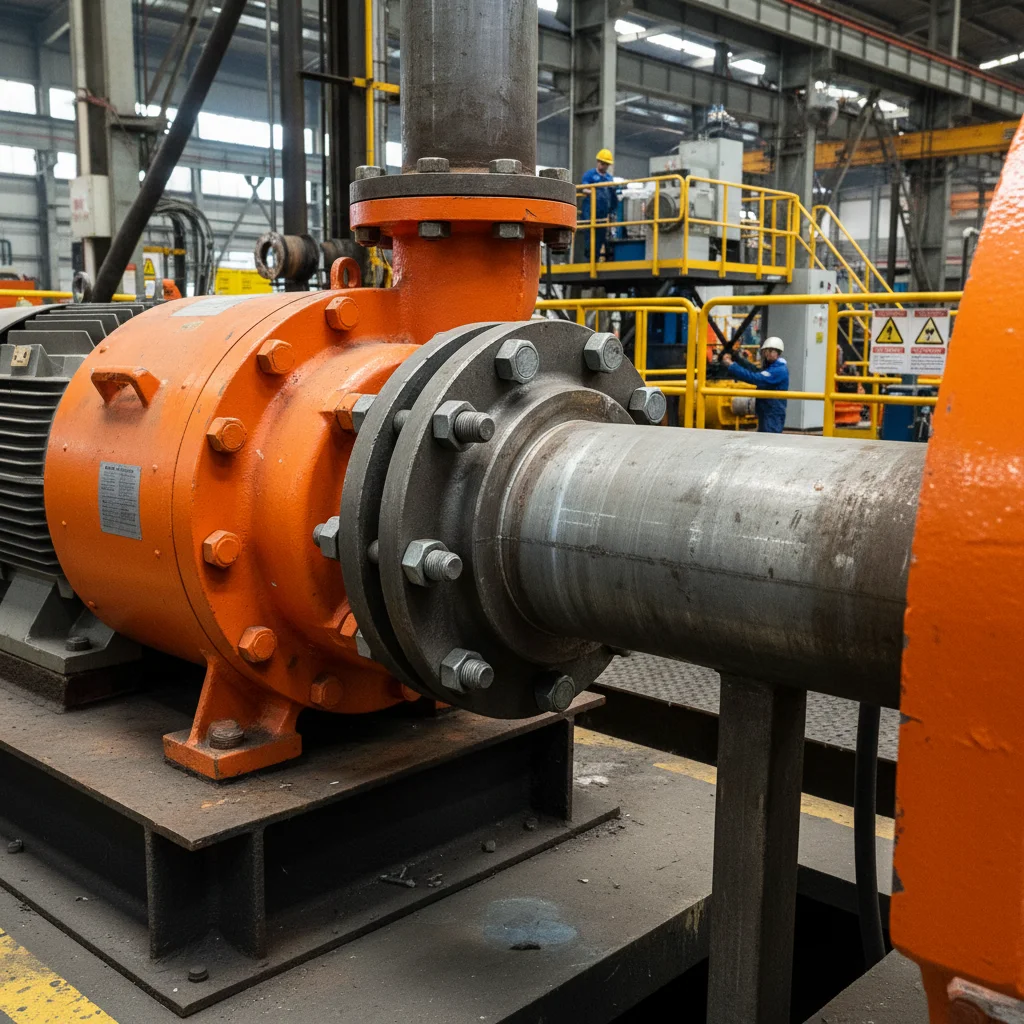
In the complex world of industrial piping and structural metal fabrication, the selection of connecting components can dictate the entire efficiency of a system. The slip on flange stands out as a pivotal solution for engineers seeking a balance between installation speed and structural integrity, particularly in low to medium pressure environments. Understanding the nuances of these components is essential for maintaining safety standards across global infrastructure.
Across various sectors, from urban water management to chemical processing, the demand for reliable sealing and joining methods remains constant. The global shift toward modular construction and rapid deployment has placed a premium on components that reduce labor intensity without compromising the system's overall lifespan. This is where the versatility of the slip on design provides a distinct competitive advantage.
By analyzing the technical specifications and material properties of the slip on flange, procurement managers and site engineers can optimize their project budgets while adhering to strict ANSI and ASME standards. Whether dealing with corrosive seawater or high-pressure steam, the right choice of flange ensures long-term operational stability.

Technical Standards and Specifications of Slip On Flanges
The engineering of a slip on flange is governed by strict international standards to ensure interoperability and safety. Primary execution standards include ANSI/ASME B16.5, which covers pressure ratings from Class 150 up to Class 2500, and ASME B16.47 for large-diameter steel flanges ranging from Class 75 to Class 900. These standards dictate the precise dimensions and tolerances required for a secure fit.
Key parameters include the Nominal Pipe Size (NPS), ranging from 1/2" (15mm) to 60" (1500mm), and the sealing face design. While Flat Face (FF) and Raised Face (RF) are common, higher pressure ratings (Class 600 and above) often utilize Male-Female (MFM) or Tongue-Groove (TG) faces to enhance sealing performance under extreme stress.
Material Selection for Diverse Application Scenarios
Selecting the correct material for a slip on flange is critical to preventing premature failure due to corrosion or thermal stress. Carbon steel (ASTM A105/A516) is the most economical choice, offering high strength for ambient temperatures and non-corrosive media like natural gas or tap water, typically within a range of -29℃ to 427℃.
For environments involving aggressive chemicals or seawater, stainless steel (ASTM A182 F304/F316) is the gold standard. Its chromium-nickel alloy composition allows it to resist acid and alkali corrosion within a pH range of 2-12, and it can withstand temperatures up to 870℃, making it indispensable for refinery vacuum distillation units.
In extreme conditions, such as LNG pipelines or high-pressure steam systems, alloy steel (ASTM A350 LF2) is employed. This material provides exceptional low-temperature toughness, maintaining impact energy ≥27J even at -46℃, ensuring that the flange does not become brittle in cryogenic applications.
Manufacturing Processes and Quality Control
The production of a high-quality slip on flange begins with rigorous raw material inspection. Spectral analysis is used to verify chemical composition, such as ensuring Cr content is ≥18% for 304 stainless steel, while ultrasonic testing (UT) is utilized to detect internal cracks before the forming process begins.
Forming methods vary by size; open die forging is typically used for diameters ≤12", while steel plate cutting and welding are used for sizes ≥14". Once formed, CNC lathes process the sealing faces to a flatness of ≤0.05mm/m, and bolt holes are drilled to a positional tolerance of ±0.3mm to ensure a perfect match with mating components.
Post-machining, heat treatment is applied to optimize mechanical properties. Carbon steel undergoes normalization at 890-920℃ to eliminate welding stress, while stainless steel is subjected to solution annealing with water quenching at 1050℃ to maximize its corrosion resistance and longevity.
Comparative Analysis: Slip On vs Weld Neck Flanges
When choosing between a slip on flange and a weld neck (WN) flange, the primary considerations are welding complexity and pressure requirements. Slip on types are characterized by lower welding difficulty, requiring only an outer fillet weld, which significantly reduces installation time and labor costs.
However, the sealing performance of a slip on design relies more heavily on gasket compression, making it ideal for applications ≤Class 600 (PN11MPa). In contrast, weld neck flanges provide a fused connection that is necessary for high-pressure steam or main oil and gas transmission lines where X-ray inspection of full-penetration welds is mandatory.
Performance Rating: Slip On Flange Variations
Global Industrial Use Cases and Applications
The application of the slip on flange is widespread across diverse geographical regions and industries. In urban infrastructure, these flanges are the backbone of water supply and drainage systems, as well as district heating pipelines, where their ease of installation reduces the time needed for road closures and urban disruption.
In the energy sector, specifically within thermal power plants, they are frequently utilized in circulating water systems. Furthermore, in the petrochemical industry, stainless steel versions are integrated into reactor feed pipelines and atmospheric distillation units, providing a robust barrier against corrosive chemical agents.
Long-Term Value and Economic Advantages
The long-term value of adopting a slip on flange lies in the significant reduction of Total Cost of Ownership (TCO). Because they require less material than weld neck alternatives and utilize simpler welding techniques, the initial procurement and installation costs are markedly lower.
Beyond the financial aspect, there is a critical safety and reliability component. When manufactured to ASME standards, these components provide a dependable seal that minimizes the risk of leaks in non-critical pressure zones, thereby protecting personnel and reducing environmental impact.
The ability to quickly replace a slip on component during maintenance cycles also enhances system uptime. This agility is vital for industrial plants where every hour of downtime translates to significant revenue loss, ensuring that innovation and productivity remain uninterrupted.
Future Trends in Flange Technology and Innovation
Looking forward, the evolution of the slip on flange is being driven by the global transition toward green energy and digitalization. We are seeing a rise in the use of advanced composite materials and specialized coatings that further enhance corrosion resistance beyond traditional stainless steels, especially for hydrogen transport systems.
Automation in manufacturing, such as the integration of AI-driven CNC machining, is pushing the boundaries of dimensional precision. This ensures that bolt circle diameter (BCD) tolerances are tighter than ever, reducing the reliance on manual adjustment during field installation and speeding up the assembly of modular plants.
Sustainability is also playing a role, with a shift toward recycled alloy steels that maintain the same structural integrity as virgin materials. As industries move toward "Net Zero," the carbon footprint of the manufacturing process—from forging to heat treatment—is becoming a key metric for supplier selection.
Comparison of Slip On Flange Material Performance across Industries
| Material Type | Primary Industry | Pressure Suitability | Durability Score (1-10) |
|---|
| Carbon Steel (A105) | Urban Water/Gas | Class 150-300 | 7 |
| Stainless Steel (F304) | Chemical/Pharma | Class 150-600 | 9 |
| Alloy Steel (LF2) | LNG/Cryogenic | Class 300-900 | 10 |
| Stainless Steel (F316) | Marine/Offshore | Class 150-600 | 9 |
| Carbon Steel (A516) | Boiler Systems | Class 150-450 | 8 |
| Alloy Steel (High Temp) | Steam Turbines | Class 600-1500 | 9 |
FAQS
The primary difference lies in the welding method and pressure capacity. A slip on flange slides over the pipe and is welded on the outside (fillet weld), making it easier and cheaper to install. A weld neck flange is welded directly to the pipe with a full-penetration groove weld, providing superior strength and sealing for high-pressure systems (up to Class 2500), whereas slip on flanges are typically limited to Class 600.
Generally, no. Carbon steel (ASTM A105) is suitable for non-corrosive media like water or natural gas. For chemical pipelines, where pH levels may range from 2 to 12, stainless steel (ASTM A182 F304/F316) is required. Using carbon steel in corrosive environments would lead to rapid oxidation and potential system failure.
The most common are Flat Face (FF) and Raised Face (RF). For applications with pressure ratings of Class 600 and above, Male-Female (MFM) or Tongue-Groove (TG) faces are often used. These specialized designs create a more secure mechanical seal, reducing the likelihood of leakage under high-stress conditions.
Quality can be verified through several methods: spectral analysis for material composition, ultrasonic testing (UT) for internal defects, and checking the dimensional tolerances (e.g., flatness ≤0.05mm/m). Additionally, requesting a hydrostatic test report, where the flange is tested at 1.5 times its design pressure, is a standard industry practice.
ASTM A350 LF2 alloy steel is specifically designed for low-temperature service. It maintains excellent toughness with impact energy ≥27J at -46℃, making it ideal for LNG pipelines and liquid nitrogen systems, while also being capable of handling high-temperature steam systems.
Yes, they are compatible with both. The slip on design is based on the Nominal Pipe Size (NPS), which corresponds to the outer diameter of the pipe. For example, an NPS 2" flange is designed to fit any pipe with an outer diameter of 60.3mm, regardless of whether that pipe was manufactured via a seamless or welded process.
Conclusion
The slip on flange represents a critical intersection of economic efficiency and mechanical reliability in the structural metal fabrication industry. By adhering to ASME standards and selecting materials tailored to the specific environmental stressors—whether it be the low-temperature demands of LNG or the corrosive nature of chemical refineries—engineers can ensure system longevity and safety. From the precision of CNC machining to the rigor of non-destructive testing, every step in the manufacturing process contributes to a component that facilitates global infrastructure growth.
As we move toward a more sustainable industrial future, the integration of recycled alloys and automated precision will only further the utility of these components. For companies looking to optimize their piping systems, investing in high-standard flanges is not merely a procurement choice but a strategic decision for operational resilience. Visit our website for more professional solutions: www.weihuantube.com.