In the complex world of industrial piping, the stainless steel threaded pipe flange serves as a critical nexus, ensuring secure, leak-proof connections between pipes, valves, and other equipment. These components are engineered to withstand extreme pressures and corrosive environments, making them indispensable for maintaining the structural integrity of fluid transport systems across the globe.
Understanding the technical nuances of these flanges is not merely a matter of procurement but a safety imperative. Whether in a chemical processing plant or a high-pressure steam line, the choice of a high-grade stainless steel threaded pipe flange determines the longevity of the installation and the operational safety of the entire facility.
As global infrastructure evolves toward higher efficiency and tighter environmental standards, the demand for precision-engineered piping components has surged. This guide explores why the stainless steel threaded pipe flange remains the gold standard for modularity and reliability in modern structural metal manufacturing.

Global Industry Context of Stainless Steel Threaded Pipe Flanges
The global movement toward industrial automation and higher safety standards has placed a spotlight on the quality of connection components. According to ISO standards for piping systems, the integrity of a joint is the most common point of failure in fluid transport. The stainless steel threaded pipe flange addresses this vulnerability by combining the strength of stainless steel with the ease of threaded installation, allowing for rapid deployment in critical sectors.
Across emerging markets in Asia and established industrial zones in Europe, the push for "zero-leakage" policies has driven the adoption of high-precision flanges. The challenge often lies in balancing the need for quick assembly with the requirement for permanent, high-pressure resistance, a gap that the threaded flange effectively bridges.
Technical Definition and Industrial Meaning
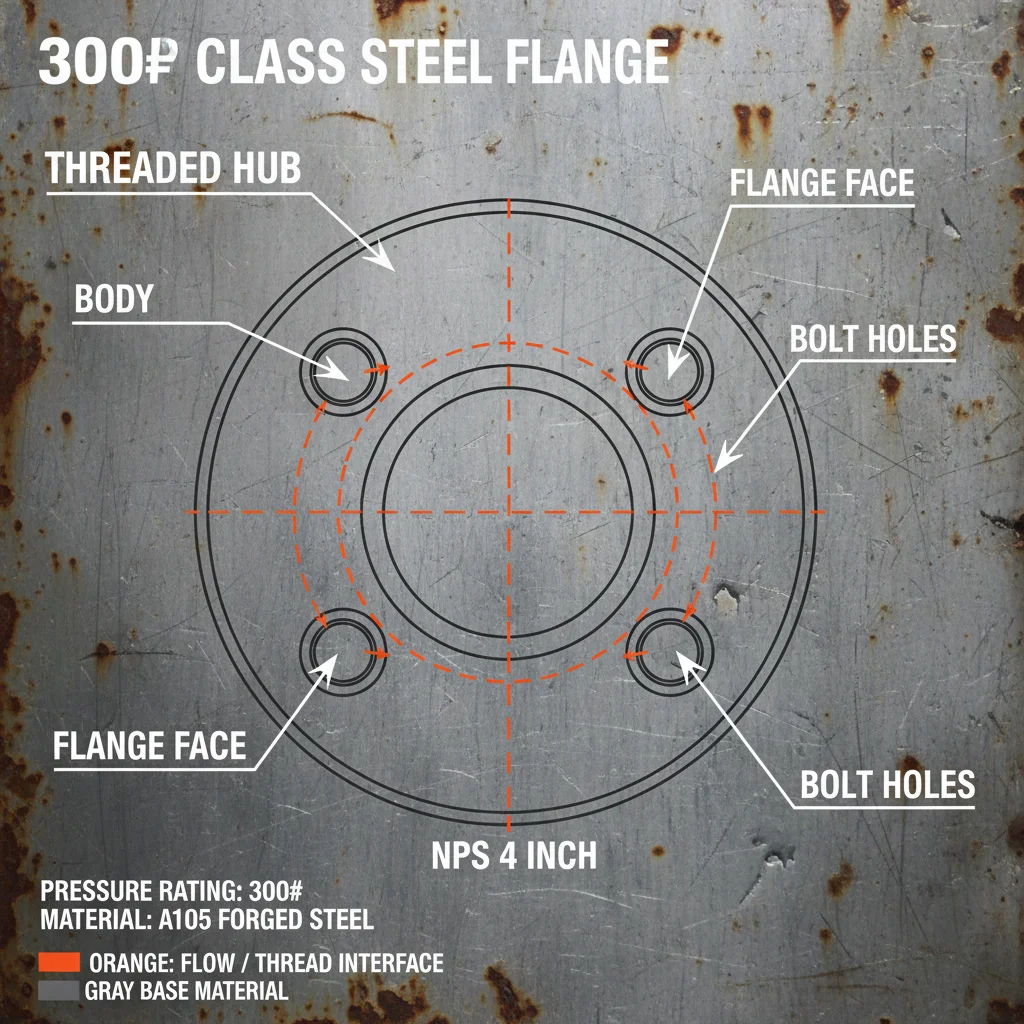
At its core, a stainless steel threaded pipe flange is a circular connector featuring an internal thread that allows it to be screwed directly onto a matching pipe end. Unlike welded flanges, which require specialized heat treatment and non-destructive testing, threaded flanges offer a mechanical connection that simplifies maintenance and replacement.
In the broader context of modern industry, these components represent a commitment to modularity. By providing a standardized interface, they enable engineers to design systems that can be scaled or modified without dismantling entire sections of the pipeline, which is crucial for humanitarian water projects and rapid-response industrial setups.
Furthermore, the use of stainless steel—typically grades 304 or 316—ensures that the connection remains impervious to oxidation and chemical attack. This meaning extends beyond simple hardware; it is about ensuring the continuous flow of essential resources, from pharmaceutical ingredients to potable water, without risk of contamination.
Core Components and Performance Factors
The performance of a stainless steel threaded pipe flange is primarily dictated by its material composition and thread precision. High-grade chromium and nickel alloys provide the necessary corrosion resistance, while the adherence to NPT or BSPT threading standards ensures global compatibility across different hardware manufacturers.
Durability is another critical factor. A well-manufactured stainless steel threaded pipe flange must maintain its structural integrity under thermal expansion and contraction. This requires precise forging techniques that eliminate internal voids, ensuring the flange does not warp or crack when subjected to the extreme temperature swings common in industrial steam lines.
Finally, sealability and pressure rating are the ultimate benchmarks. The interaction between the thread taper and the sealing compound determines whether a stainless steel threaded pipe flange can handle high-pressure transients without leaking, making the quality of the machining process the most vital aspect of its production.
Global Applications and Use Cases
The versatility of the stainless steel threaded pipe flange allows it to be deployed in environments ranging from ultra-sterile laboratories to harsh offshore oil rigs. In the food and beverage industry, these flanges are used to connect processing tanks to distribution lines, where the non-reactive nature of stainless steel prevents flavor contamination and meets strict FDA hygiene requirements.
In remote industrial zones or post-disaster relief operations, the ability to assemble piping without welding equipment is a game-changer. Engineers can quickly deploy water purification systems using threaded flanges, providing immediate access to clean water in regions where electricity and specialized labor are unavailable.
Performance Comparison of Threaded Flange Installation Methods
Advantages and Long-Term Strategic Value
The primary advantage of implementing a stainless steel threaded pipe flange is the drastic reduction in downtime. Because these components can be disassembled with standard wrenches, routine maintenance and sensor calibration can be performed in minutes rather than hours, avoiding the costly process of cutting and re-welding pipes.
From a sustainability perspective, the long-term value lies in the lifespan of the material. Stainless steel's inherent resistance to atmospheric corrosion means that these flanges rarely need replacement, reducing the industrial waste associated with piping overhauls and ensuring a lower total cost of ownership (TCO) for the facility operator.
Future Trends and Material Innovations
The future of the stainless steel threaded pipe flange is being shaped by the digital transformation of manufacturing. Additive manufacturing (3D printing) is beginning to allow for the creation of complex, internal geometries within the flange that can reduce turbulence and pressure drops, optimizing the flow of fluids in high-efficiency systems.
Furthermore, the integration of "Smart Flanges" is on the horizon. By embedding IoT sensors into the body of the stainless steel threaded pipe flange, operators will be able to monitor real-time pressure and leak data, transitioning from reactive maintenance to predictive maintenance models.
Green energy initiatives are also driving the development of new duplex stainless steel grades. These materials offer even higher strength and superior resistance to stress corrosion cracking, ensuring that flanges used in hydrogen transport or carbon capture systems can operate safely for decades.
Overcoming Common Implementation Challenges
One of the most common challenges when installing a stainless steel threaded pipe flange is "galling," a form of cold welding that occurs when stainless steel threads seize during tightening. This can be overcome by using anti-seize lubricants or selecting specific alloy combinations that minimize the friction coefficient during assembly.
Another hurdle is the risk of over-tightening, which can distort the flange face and compromise the seal. The solution lies in the adoption of calibrated torque wrenches and strict adherence to engineering specifications, ensuring that the mechanical load is distributed evenly across the threaded interface.
Finally, ensuring the correct thread match (e.g., NPT vs. BSPT) remains a frequent source of error in international projects. Implementing a rigorous quality control check at the receiving end of the supply chain ensures that the stainless steel threaded pipe flange fits perfectly, preventing costly delays and potential leaks.
Analysis of Implementation Challenges and Expert Solutions
| Challenge Type |
Technical Root Cause |
Expert Solution |
Impact Score (1-10) |
| Thread Galling |
Oxide layer disruption |
Nickel-based anti-seize |
9 |
| Seal Leakage |
Insufficient thread engagement |
Precision torque control |
10 |
| Material Corrosion |
Chlorine exposure |
Upgrade to 316L Grade |
8 |
| Thread Mismatch |
Regional standard differences |
Standardized QC verification |
7 |
| Thermal Stress |
Differential expansion |
Flexible coupling integration |
6 |
| Installation Speed |
Complex access points |
Modular pre-assembly |
8 |
FAQS
The primary difference lies in the connection method. A stainless steel threaded pipe flange allows for a mechanical screw-in connection, which is faster to install and easier to disassemble for maintenance. Welded flanges, conversely, are permanently fused to the pipe, offering higher pressure ratings but requiring specialized welding equipment and longer installation times.
Galling is prevented by reducing friction between the mating threads. We recommend using a high-quality anti-seize compound or a nickel-based lubricant. Additionally, ensuring the threads are clean and avoiding excessive, rapid tightening can significantly reduce the risk of the threads seizing.
For marine or highly corrosive saltwater environments, Grade 316 or 316L stainless steel is the superior choice. These grades contain molybdenum, which provides significantly better resistance to pitting and crevice corrosion compared to the standard Grade 304.
While stainless steel threaded pipe flanges are robust, they generally have lower pressure ratings than forged welded flanges. They are ideal for low to medium-pressure systems. For ultra-high-pressure applications, it is critical to consult the pressure-temperature ratings provided by the manufacturer to ensure safety.
You must verify the threading standard—common ones include NPT (National Pipe Tapered) and BSPT (British Standard Pipe Tapered). These are not interchangeable. Always check the technical specifications of your existing pipe and match them exactly with the flange order to avoid leaks and assembly failure.
Yes, they are highly sustainable. Stainless steel is 100% recyclable, and the durability of the stainless steel threaded pipe flange means fewer replacements over time. Additionally, the ability to reuse these components during system reconfiguration reduces industrial waste.
Conclusion
In summary, the stainless steel threaded pipe flange represents the perfect intersection of durability, modularity, and efficiency. By overcoming the traditional barriers of installation time and maintenance complexity, it enables industrial operators to maintain high-performance fluid systems with minimal downtime and maximum safety. From material selection (304 vs 316) to the precision of the thread, every detail contributes to the long-term reliability of the infrastructure.
Looking forward, as we move toward a future of smart factories and sustainable energy, the role of precision-engineered piping components will only grow. We suggest that engineers prioritize high-grade certifications and predictive maintenance strategies to fully leverage the potential of these components. For those seeking the highest quality in structural metal manufacturing, investing in premium stainless steel flanges is not just a technical choice—it is a strategic investment in operational excellence. Visit our website: www.weihuantube.com