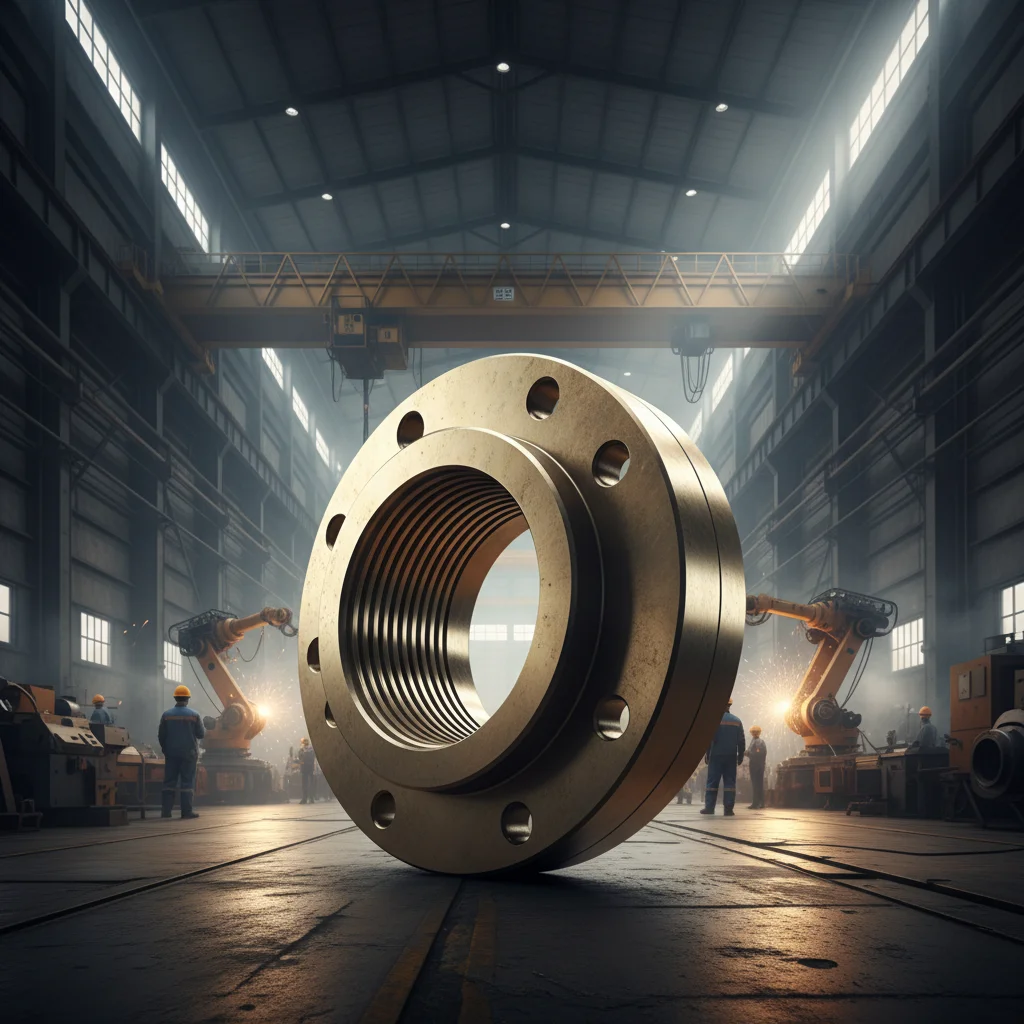
Selecting the correct slip on flange dimensions is not merely a matter of following a chart; it is a critical engineering decision that determines the integrity of the entire piping joint. A discrepancy of just a few millimeters in the bore diameter can lead to weld failure or costly on-site rework, directly impacting project timelines and safety.
For procurement managers and technical directors, the challenge lies in bridging the gap between theoretical ASME B16.5 standards and the actual manufacturing tolerances provided by global exporters. Ensuring that the outside diameter, bolt circle, and thickness align perfectly with mating equipment is the only way to prevent catastrophic joint leaks in high-pressure environments.
In this comprehensive guide, we analyze the technical intricacies of slip-on flange specifications and provide a practical framework for evaluating supplier precision, helping you reduce the total cost of ownership through accurate procurement.

The Critical Role of Dimensional Precision in Piping

In the realm of structural metal fabrication, the margin for error is virtually zero. When dealing with slip-on flanges, the bore diameter must be slightly larger than the pipe's outside diameter to allow the flange to slide on, yet tight enough to ensure a robust fillet weld both inside and outside.
Dimensional errors typically manifest as bolt circle irregularities or bore mismatches. If the bolt holes are misaligned by even a small fraction, the resulting uneven gasket compression creates "leak paths," which are particularly dangerous in chemical or petroleum transport where hazardous materials are present.
Cangzhou Weihuan Pipeline Equipment Co., Ltd. addresses these risks by integrating CNC machining with rigorous QA/QC protocols, ensuring that every component exported meets the stringent requirements of international projects, from nuclear power plants to petrochemical refineries.
Technical Anatomy of Slip-On Flange Specifications
Understanding the specific variables of slip-on flange dimensions requires a deep dive into the ASME B16.5 standard. The primary dimensions include the Outside Diameter (OD), the Bolt Circle Diameter (BCD), and the Flange Thickness (T), all of which must be coordinated with the pipe schedule.
The "Slip-On" nature means the flange does not have a hub that extends into the pipe, making it easier to align than weld-neck flanges. However, this design places more stress on the fillet welds, making the precision of the bore-to-pipe fit paramount for weld penetration and structural strength.
Beyond the physical size, the surface finish (Ra value) is equally critical. A flat face (FF) design requires a smooth, consistent plane to allow full-face gaskets to seal effectively without cracking under the torque applied to the bolts.
High-Risk Application Scenarios for Slip-On Joints
Slip-on flanges are predominantly utilized in low-pressure and non-corrosive services. Their ease of installation makes them ideal for water treatment facilities, HVAC systems, and low-pressure industrial piping where the costs of weld-neck flanges cannot be justified.
However, when these components are used near pipe bends or three-way tees, they are subjected to intensified stress. The lack of a reinforced hub means that any misalignment in the dimensions can compound the stress concentration, leading to fatigue cracks over time under dynamic loading.
In offshore or chemical environments, material selection—such as ASTM A182 F316 stainless steel—must be paired with precise dimensional control to prevent galvanic corrosion at the joint interface, ensuring the longevity of the infrastructure.
Comparing Manufacturing Tolerances Against Industry Benchmarks
The difference between a standard compliant flange and a precision engineered flange is found in the tolerance deviation. While ASME B16.5 allows for certain variances, high-end projects demand tighter controls to minimize the risk of site-assembly delays.
By utilizing advanced CNC machining lines, it is possible to reduce the positional error of bolt circles and the variance in flange thickness, which directly improves the consistency of gasket seating stress across the entire joint.
slip on flange dimensions Performance Metrics
As indicated in the performance comparison, precision-machined flanges significantly reduce the rate of installation rework and leakage incidents compared to standard mass-produced alternatives, offering a higher reliability index for critical infrastructure.
Procurement Strategies for Zero-Defect Flange Sourcing
To avoid the hidden costs of flange-related failures, procurement teams must move beyond price-per-unit metrics. The focus should shift toward verifying the supplier's capability for full traceability and dimensional verification.
Requesting EN 10204 3.1 Material Test Certificates (MTC) and Positive Material Identification (PMI) reports is non-negotiable for high-spec projects. These documents prove that the material chemistry and mechanical properties match the engineered requirements.
Furthermore, verifying the exporter's logistics capability—specifically their use of seaworthy plywood cases and pallets—ensures that the precise dimensions are not compromised by warping or corrosion during international transit.
Future Directions in Precision Flange Manufacturing
The industry is gradually shifting toward digital twin integration and automated inspection systems. Laser-verification of bore and bolt circle dimensions is becoming the standard for high-reliability supply chains, replacing manual caliper measurements.
There is also an increasing trend toward the use of hybrid materials and advanced coatings to enhance the corrosion resistance of carbon steel flanges without compromising the dimensional stability required for a perfect seal.
As global supply chains prioritize resilience, the integration of digital service platforms—combining technical consulting with real-time production tracking—is likely to reduce the lead time for custom-dimensioned forgings and specialized fittings.
Selection Matrix for Different Pressure Classes
Selecting the appropriate pressure class depends on the working pressure and temperature of the system. While Class 150 is common for general utility, higher classes require significantly different dimensions to handle the increased axial loads on the bolts.
The following matrix provides a comparative view of how different slip-on flange configurations perform under various operating conditions to assist in the final selection process.
| Pressure Class | Primary Use Case | Critical Dimension Focus | Risk Factor |
|---|---|---|---|
| Class 150 | Low-pressure water/air | Bore fit-up | Gasket creep |
| Class 300 | Moderate oil/gas lines | Flange thickness | Bolt fatigue |
| Class 600 | High-pressure steam | Bolt circle precision | Thermal expansion |
| Class 900 | Specialized chemical | Facing Ra finish | Corrosion pitting |
| Class 1500 | Extreme pressure service | Wall thickness | Joint deflection |
| Custom/OEM | Aerospace/Nuclear | Tighter tolerances | Material purity |
Ultimately, the decision must be based on a combination of the rated working pressure, the chosen gasket material, and the expected lifecycle of the piping system. For detailed data sheets on Class 300 through 2500, technical directors should consult the full ASME standards.
Frequently Asked Questions
Conclusion
Precision in slip on flange dimensions is the cornerstone of a leak-free piping system. By prioritizing strict adherence to ASME B16.5 standards and verifying supplier tolerances, engineering teams can drastically reduce rework costs and operational risks.
Professionals seeking reliable, certified components can review the full range of precision flanges and pipeline accessories available through www.weihuantube.com to ensure their infrastructure meets the highest global standards.