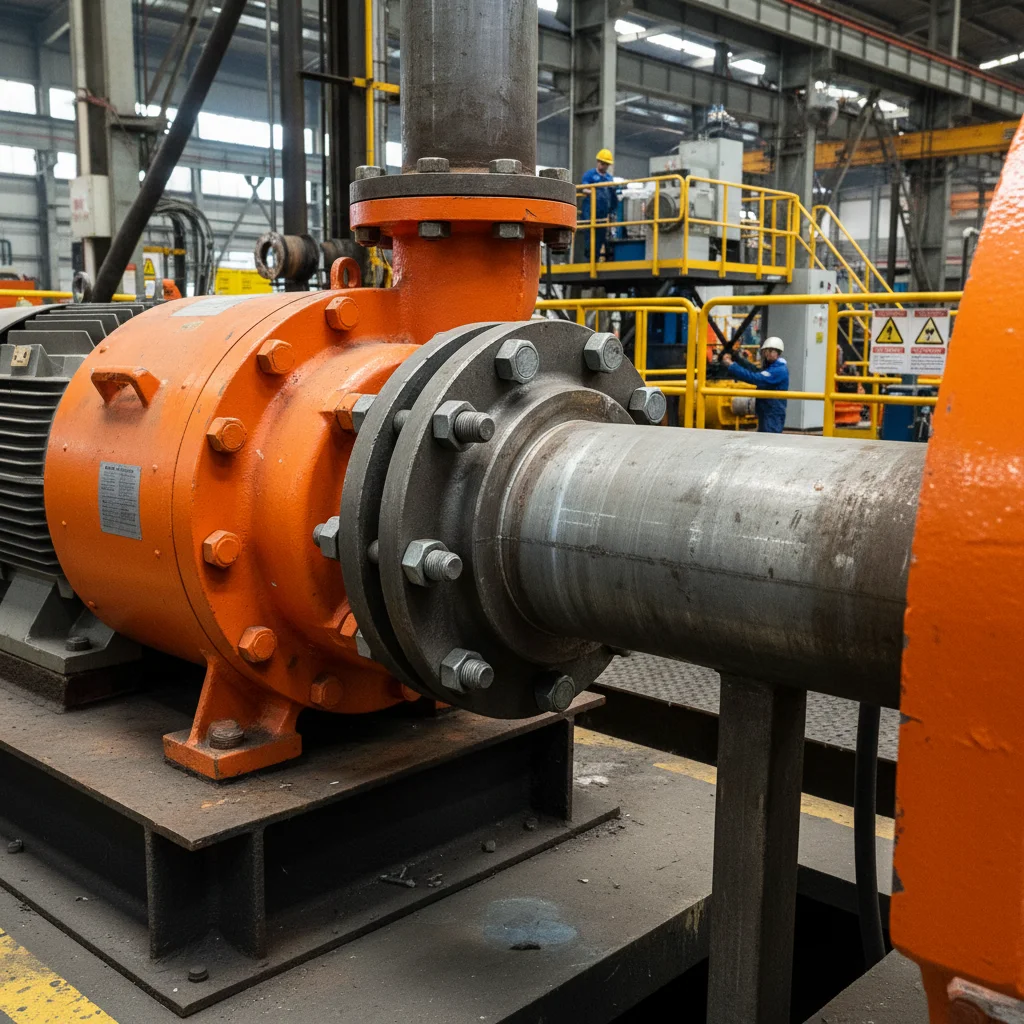
Selecting the right flange for a piping system often comes down to a critical trade-off between installation speed and structural rigidity. While weld neck options are prized for high-pressure security, the slip-on variant remains a cornerstone for industrial assemblies where alignment flexibility and cost-efficiency are the primary drivers.
In the context of structural metal manufacturing, the demand for customized piping components has shifted toward Original Design Manufacturing (ODM) models. This allows engineers to specify precise tolerances and material grades, ensuring that the flange fits perfectly within the unique constraints of a specific project rather than relying on generic off-the-shelf components.
For procurement managers and system designers, understanding the technical boundaries of an ODM carbon steel slip on flange is essential to avoid premature joint failure. This article analyzes the design logic, selection criteria, and practical application of these components in modern industrial infrastructure.


Unlike weld neck flanges that require a precise butt weld, the slip-on design allows the pipe to slide inside the flange bore. This "slip" mechanism provides a significant advantage during field installation, as it allows for slight misalignments to be corrected before the final weld is applied.
The connection is typically secured by fillet welds on both the internal and external faces of the hub. This creates a reinforced joint that, while not as strong as a fully integrated hub, is more than sufficient for low-to-medium pressure services where ease of assembly reduces labor costs.
Carbon steel remains the dominant material for these components due to its balance of strength, weldability, and cost. In professional manufacturing, the choice of grade depends on the operating temperature and the nature of the transported media. For standard applications, forged A105 is the industry benchmark, providing a reliable response to mechanical stress.
In cryogenic or low-temperature environments, materials like A350 LF2 or LF6 are utilized to prevent brittle fracture. These alloys undergo specific heat treatments to maintain ductility at sub-zero temperatures, ensuring that the flange does not crack under thermal contraction.
Beyond carbon steel, the ODM process often incorporates stainless steels (304L, 316L) or high-grade alloys for corrosive environments. The ability to customize the material chemistry allows operators to match the flange's corrosion resistance to the specific acidity or alkalinity of the chemical process being managed.
The integrity of a slip-on connection is heavily dependent on the quality of the fillet weld and the flatness of the sealing face. Any deviation in the machining of the Raised Face (RF) or Ring Joint (RJ) can lead to microscopic leak paths, which are unacceptable in hazardous media transport.
Structural safety in piping is not merely about the material grade, but about the distribution of stress at the joint. Slip-on flanges concentrate stress at the fillet weld, whereas weld neck designs distribute it through a tapered hub.
To mitigate these risks, rigorous non-destructive testing (NDT) is employed. Ultrasonic Testing (UT) and Magnetic Particle Testing (MT) are used to identify internal forging defects or weld porosity, ensuring that the finished component meets ASME B16.5 or B16.47 standards before deployment.
When comparing different flange types, engineers use a multi-dimensional index to determine the most suitable component. While the slip-on variant excels in installation speed and initial cost, it trails in extreme pressure resistance.
The following analysis illustrates the relative performance of these components across five key operational metrics, based on typical industrial evaluation frameworks.
In typical industrial settings, such as water treatment plants or low-pressure HVAC systems, the ODM carbon steel slip on flange is the preferred choice. Its ability to be quickly positioned and welded allows for rapid assembly of complex piping networks without the need for high-precision pipe end beveling.
However, in critical infrastructure like nuclear power generation or high-pressure oil exploration, these are replaced by weld neck versions. In these scenarios, the risk of mechanical failure due to vibration or thermal expansion outweighs the benefits of faster installation, necessitating a seamless, integral connection.
The transition toward supply chain management platforms has transformed how pipe fittings are sourced. Companies like Cangzhou Weihuan Pipeline Equipment Co., Ltd. have integrated technical consulting with manufacturing, moving away from simple product sales to providing customized supporting solutions.
Digital service platforms now allow for real-time demand docking, where the technical requirements of a project—such as specific ASME pressure ratings or chemical analysis for raw materials—are matched with the manufacturing capability of the facility. This reduces the lead time and eliminates errors in specification.
Modern logistics and standardized packaging further ensure that high-precision components arrive at international sites without surface damage, maintaining the integrity of the sealing faces which is critical for the immediate installation of carbon steel flanges in global projects.
Choosing between a slip-on and a weld neck flange requires a rigorous assessment of the operational environment. The decision is rarely based on cost alone but rather on the "Criticality Grade" of the service. High-pressure, hazardous, or high-temperature media automatically shift the requirement toward weld neck designs.
Conversely, for systems where maintenance is frequent and the pipe size is small to medium, the slip-on variant offers the necessary balance. It provides a reliable seal while simplifying the procurement and replacement cycle.
The following table provides a decision matrix for engineers to evaluate the relative suitability of these two primary connection types based on operational requirements.
| Evaluation Factor | Slip-On Flange | Weld Neck Flange | Recommended Use |
|---|---|---|---|
| Connection Strength | Moderate | Exceptional | Weld Neck for High Load |
| Installation Effort | Low / Fast | High / Precise | Slip-On for Rapid Setup |
| Leakage Risk | Low (Standard) | Minimal (High-Seal) | Weld Neck for Hazardous |
| Thermal Stability | Moderate | High | Weld Neck for Steam |
| Pressure Rating | Low to Medium | Medium to Ultra-High | Based on ASME Class |
| Maintenance Cycle | Frequent/Easy | Long-term/Fixed | Slip-On for Modularity |
ODM (Original Design Manufacturing) means the flange is produced based on specific technical drawings and requirements provided by the buyer rather than a standard catalog item. This allows for customization of dimensions, material grades (such as A105 or A350 LF2), and sealing face types (RF, RJ, etc.) to ensure the component meets the exact needs of a specific industrial project, improving compatibility and system safety.
Slip-on flanges are preferred in low-to-medium pressure applications where installation speed and cost are critical. Because they slide over the pipe and are fillet-welded, they are much easier to align in the field. This makes them ideal for water lines, low-pressure air systems, and general industrial piping where the extreme structural reinforcement of a butt-welded hub is not required.
Pressure ratings, defined by ASME standards, indicate the maximum allowable working pressure for the component. Class 150 is suitable for lower pressures, while Class 2500 is for ultra-high pressure. While slip-on flanges can be manufactured in various classes, their inherent joint design is less suitable for the highest classes (e.g., Class 900+) compared to weld neck flanges, which distribute stress more effectively.
High-vibration environments create cyclic stress on the joint. In a slip-on flange, this stress is concentrated at the fillet weld, which can lead to fatigue cracking over time. Weld neck flanges are designed with a tapered hub that transitions the stress more smoothly from the pipe to the flange, making them the gold standard for applications involving severe vibrations or frequent pressure fluctuations.
Ultrasonic Testing (UT) is critical for detecting internal voids or inclusions within the forged material. Magnetic Particle Testing (MT) is used to identify surface-level cracks, especially after welding or heat treatment. Together with chemical analysis and mechanical property testing (tensile and hardness), these ensure the flange meets the required safety margins for industrial use.
Yes, provided the material is changed from carbon steel to a corrosion-resistant alloy. Stainless steel (316L) or specialized alloys like Hastelloy and Monel can be used. However, the "slip-on" design itself does not provide corrosion resistance; that is a function of the metallurgy. For extremely harsh conditions, Duplex Stainless Steel is often recommended for its combined strength and resistance.
The ODM carbon steel slip on flange remains an indispensable tool in industrial piping due to its unique balance of assembly efficiency and reliable performance. While it cannot replace the weld neck flange in critical, high-pressure services, its role in general infrastructure and modular systems is irreplaceable.
As the industry moves toward platform-based supply chains, the ability to integrate precision machining with strict ASME compliance ensures that these components contribute to long-term operational safety. The key to success lies in a rigorous selection process that matches the flange's mechanical limits to the actual demands of the piping environment.