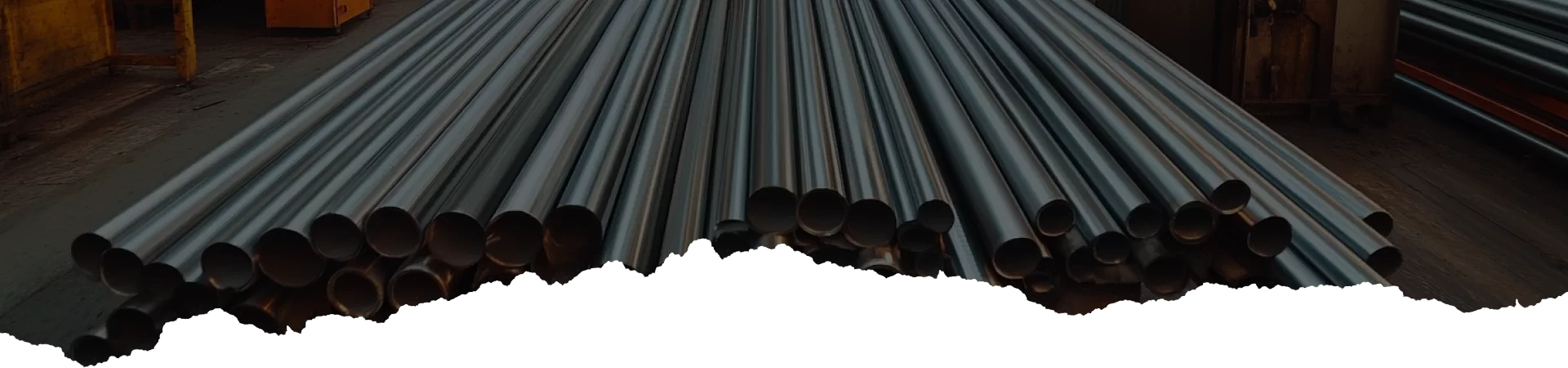
The global transition toward more resilient industrial infrastructure has placed a renewed focus on the integrity of high-pressure fluid transport. In sectors ranging from petrochemical refining to nuclear power, the demand for ODM seamless steel pipe solutions has increased as engineers seek to eliminate the inherent leak risks associated with welded seams.
The challenge lies in the critical balance between material ductility and tensile strength. While seamless piping reduces potential failure points, the procurement of these components often suffers from inconsistent wall thickness and substandard material grading, which can lead to catastrophic failures under thermal cycling or extreme hydrostatic pressure.
This technical analysis examines the engineering logic behind seamless pipe selection, the impact of ODM (Original Design Manufacturer) customization on system longevity, and the critical specifications required to maintain safety compliance in hazardous environments.


Seamless piping is engineered specifically for applications where the risk of longitudinal seam failure is unacceptable. By utilizing a piercing and rolling process rather than welding plates, the resulting structure exhibits uniform stress distribution across the entire circumference.
From an ODM perspective, the ability to customize internal diameters and wall profiles allows for optimized fluid dynamics and reduced turbulence, which is critical for transporting corrosive agents or high-temperature steam.
The selection of steel grade determines the operational envelope of the piping system. For standard industrial plumbing, Malleable Cast Iron (MCI) offers a balanced cost-to-performance ratio, but high-pressure environments necessitate Forged Steel A105 or Stainless Steel 304/316 to prevent stress corrosion cracking.
Mechanical integrity is further influenced by the annealing process. Proper heat treatment ensures that the steel maintains adequate ductility, allowing the pipe to absorb energy from pressure spikes without brittle fracture, a common failure mode in low-grade recycled alloys.
Engineering teams must validate that the carbon and manganese content align with ASTM or ISO standards, as deviations as small as 0.1% can significantly alter the weldability and impact toughness of the steel at sub-zero temperatures.
In seamless production, the most critical quality metric is the eccentricity of the wall thickness. A significant variance between the minimum and maximum wall thickness can create local stress concentrations, reducing the effective pressure rating of the entire line.
This level of precision is particularly vital at the junctions where pipes meet caps or couplings. Inconsistent dimensions at the threaded interface can lead to leaks at pressures as low as 60 psi, especially when the system is subjected to thermal expansion.
Comparing material grades reveals the trade-off between initial procurement cost and long-term operational reliability. While MCI is sufficient for low-pressure water or compressed air, it cannot match the tensile strength of forged steel or the chloride resistance of stainless steel.
The following assessment evaluates different material configurations based on their suitability for extreme operating conditions, focusing on pressure tolerance and corrosion resistance.
In municipal water treatment plants, seamless configurations are deployed to prevent groundwater contamination and ensure system longevity against mineralization. For instance, in Alberta's water treatment expansions, the use of galvanized seamless components has significantly reduced maintenance intervals by eliminating seam-based corrosion.
Within petrochemical facilities, such as those on the US Gulf Coast, A105 forged seamless pipes are the standard for steam distribution. The ability to withstand 1,000 psi hydrostatic pressure without failure is a prerequisite for passing safety inspections and avoiding costly unplanned shutdowns.
The industry is moving toward "intelligent" material selection, where the chemical composition of the steel is tailored to the specific corrosive profile of the fluid it will carry. This shift reduces the reliance on over-specification and minimizes material waste.
Additionally, the integration of additive manufacturing in the creation of complex pipe fittings is beginning to complement traditional seamless production, allowing for optimized internal geometries that further reduce pressure drops.
As regulatory pressure for carbon neutrality increases, there is a growing demand for seamless pipes with lower embodied carbon, prompting manufacturers to explore hydrogen-based reduction in the steel-making process.
Procurement managers must evaluate seamless piping options based on the total cost of ownership (TCO) rather than the initial unit price. This involves analyzing the lifecycle cost, including installation, inspection, and potential failure risks.
Selecting the wrong grade can lead to premature failure, while over-specifying can waste up to 20% of the project budget. The matrix below provides a framework for aligning pipe configuration with operational requirements.
By focusing on certified materials and validated dimensions, organizations can ensure that their infrastructure remains compliant with international standards like ASME and ISO.
| Configuration Profile | Primary Material | Pressure Rating | Recommended Use Case |
|---|---|---|---|
| Basic Duty | Malleable Iron | Up to 300 psi | HVAC, Compressed Air |
| Standard Industrial | Ductile Iron | Up to 500 psi | Municipal Water Supply |
| High-Pressure Duty | Forged Steel A105 | Up to 3000 psi | Petrochemical Steam Lines |
| Corrosion Resistant | Stainless Steel 304 | Medium-High | Pharmaceutical Processing |
| Extreme Environment | Stainless Steel 316 | Medium-High | Offshore Marine Platforms |
| Precision Engineering | Custom Alloy Steel | Variable | Aerospace & Nuclear Power |
The primary advantage is the elimination of the longitudinal weld seam, which is the most common point of failure in piping systems. Seamless pipes provide a uniform wall structure, resulting in higher pressure ratings and superior resistance to internal and external stress, making them essential for high-pressure and hazardous fluid transport.
ODM allows for the customization of dimensions, coatings, and material grades to match the exact operational environment. By tailoring the wall thickness and choosing specialized coatings like hot-dip galvanization or black phosphate, engineers can mitigate the specific corrosion and fatigue risks of their project, reducing long-term maintenance costs.
Stainless Steel 316 is the recommended choice for marine environments due to the addition of molybdenum, which provides superior resistance to chloride pitting and crevice corrosion. This is critical for offshore platforms where saltwater exposure would rapidly degrade standard carbon steel or malleable iron.
Critical checkpoints include the stability of the pressure gauge over a set duration, the absence of visible weeping at the threaded junctions, and the verification that the test pressure is at least 1.5 times the maximum operating pressure. Any drop in pressure indicates a failure in either the pipe wall integrity or the seal of the fittings.
Managers should require full material traceability through mill certificates and independent third-party inspections (such as SGS or BV). Verifying certifications like ISO 9001 and CE ensures that the manufacturer follows a standardized quality management system, reducing the risk of receiving substandard alloys.
Incorrect thread tolerances, specifically in NPT or BSP standards, can lead to improper seating of caps and couplings. This results in localized stress concentrations and leak paths, even if the pipe wall itself is seamless. Using calibrated ring and plug gauges for 100% inspection is the only way to ensure a leak-proof seal.
The shift toward seamless architecture is a strategic decision to prioritize system reliability over initial cost. By aligning material grades with actual operating pressures and utilizing ODM customization to eliminate dimensional variance, industrial operators can significantly reduce the frequency of catastrophic failures.
Ultimately, the integrity of a fluid transport system depends on the synergy between the pipe and its accessories. Ensuring that every component, from the ODM seamless steel pipe to the final coupling, meets rigorous ASTM and ISO standards is the only path to achieving long-term operational safety.