The selection of precision piping components is critical for maintaining the structural integrity and flow efficiency of industrial fluid systems. Among these, the 1 1 4 threaded flange serves as a fundamental connection point, ensuring leak-proof transitions in a variety of pressurized environments. Understanding the nuances of its design and application is essential for engineers aiming to minimize downtime and maximize operational safety.
In the global manufacturing landscape, the demand for standardized yet high-performance fittings has led to the widespread adoption of specific threaded configurations. The 1 1 4 threaded flange addresses the need for a secure, mechanical joint that can be quickly installed or disassembled without the need for specialized welding equipment on-site. This versatility makes it an indispensable asset in both permanent installations and temporary bypass systems.
Whether applied in high-pressure oil gathering lines or precise chemical processing plants, the reliability of a 1 1 4 threaded flange depends on its material grade and adherence to international standards. By optimizing the connection interface, operators can significantly reduce the risk of catastrophic joint failure and fluid loss, ensuring a sustainable and safe industrial workflow.

Global Relevance of 1 1 4 Threaded Flange
Across the global energy and infrastructure sectors, the standardization of connection hardware is paramount. The 1 1 4 threaded flange has become a benchmark for mid-sized piping transitions, enabling seamless integration between different manufacturing origins. As ISO and ASME standards continue to evolve, the precision of these threaded joints ensures that a component produced in Asia can be reliably installed in a North American or European refinery without compatibility gaps.
The economic impact of utilizing high-grade threaded flanges is evident in the reduction of installation labor. By eliminating the need for extensive field welding in certain low-to-medium pressure zones, companies can reduce project timelines by up to 20%. This efficiency is particularly vital in rapid-deployment industrial zones where time-to-market directly affects the ROI of the pipeline project.
Technical Definition and Industrial Meaning
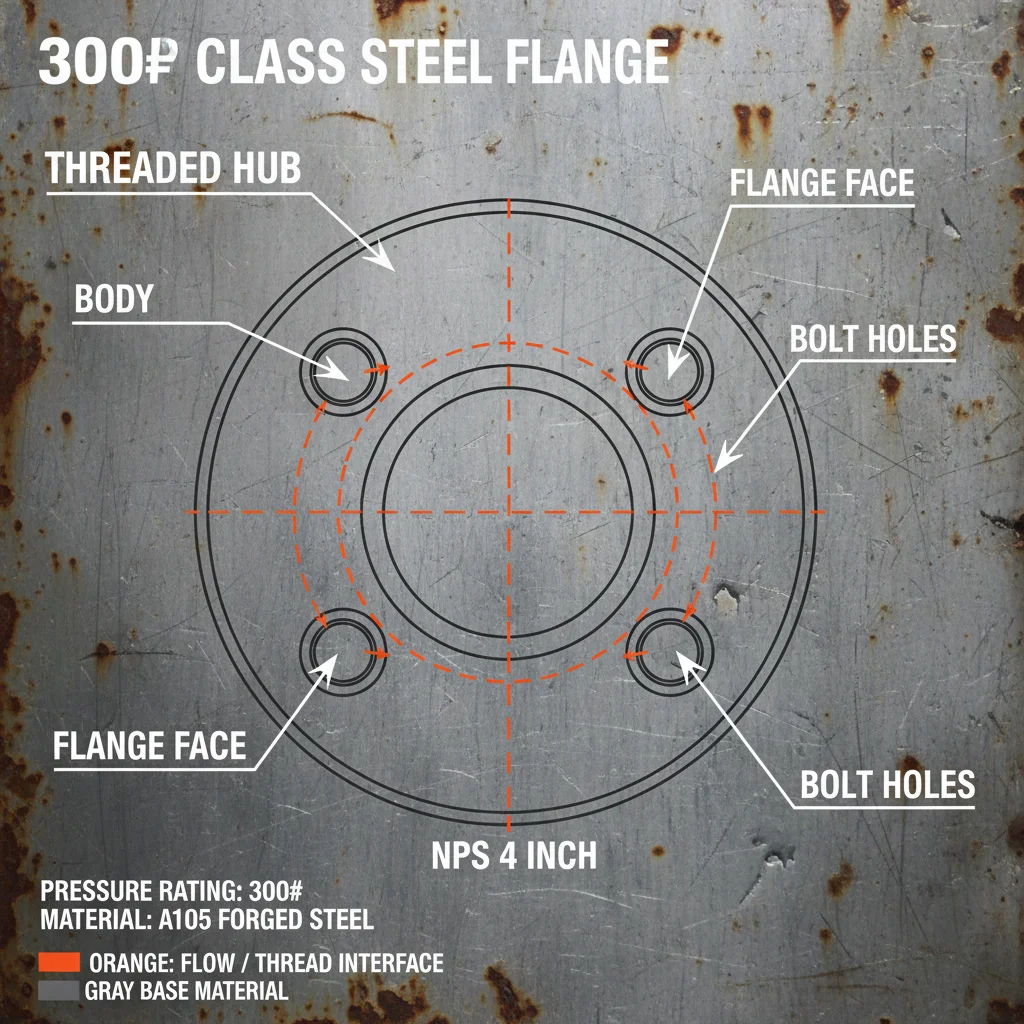
In simple engineering terms, a 1 1 4 threaded flange is a specialized circular connector that utilizes internal or external threading to join a pipe to a valve, pump, or another piping segment. Unlike weld-neck flanges, which require fusion, the threaded variant relies on the mechanical interference of the screw threads to create a seal. This design is specifically engineered for applications where frequent maintenance and dismantling are required.
Beyond its basic geometry, this component represents a critical intersection of metallurgy and mechanical engineering. The "threaded" aspect refers to the precision-cut grooves that must align perfectly with the pipe end to prevent leaks. In the context of modern industrial needs, this means the flange must resist galling, corrosion, and thread deformation under high torque, making material selection—such as carbon steel or stainless steel—a decisive factor.
From a humanitarian and infrastructure perspective, these flanges are essential for the rapid assembly of water treatment plants and emergency fuel lines in disaster-hit regions. The ability to screw together a system without needing a certified welder on-site allows NGOs and government agencies to restore critical fluid services in a fraction of the time traditional methods would require.
Core Components of High-Performance Flanges
Durability is the first cornerstone of any 1 1 4 threaded flange. The quality of the raw material, whether it be ASTM A234 WPB carbon steel or A403 stainless steel, determines how the flange handles oxidative stress and mechanical fatigue. A durable flange ensures that the threads do not strip over time, even when subjected to repeated thermal expansion and contraction cycles in volatile environments.
Scalability and compatibility are equally important. The 1 1 4 threaded flange must adhere to strict dimensional tolerances to ensure it fits perfectly within a larger system of elbows, tees, and reducers. When a system is designed for scalability, the use of standardized threaded connections allows operators to add new modules or expand the pipeline capacity without redesigning the entire joint architecture.
Finally, cost efficiency is realized through the balance of material cost and installation speed. While a high-grade 1 1 4 threaded flange may have a higher initial unit price than a basic fitting, the long-term savings in labor and the reduction in leak-related downtime provide a superior total cost of ownership. This economic logic is what drives procurement managers in the petrochemical industry to favor certified, export-grade components.
Practical Applications Across Global Industries
The implementation of the 1 1 4 threaded flange spans a diverse array of real-world contexts. In the oil and gas sector, these flanges are frequently found in gathering lines and at launcher/receiver transitions where smart-pigging operations require a secure yet removable connection. In remote industrial zones, such as the Alberta oil sands, the use of these fittings reduces the reliance on specialized field crews, allowing for faster remediation of produced-water lines.
In the chemical and pharmaceutical industries, the priority shifts toward corrosion resistance. Here, stainless steel 316L versions of the 1 1 4 threaded flange are used to transport aggressive media. The threaded design is particularly advantageous in Clean-in-Place (CIP) systems, where the piping must be periodically disassembled for deep cleaning and sterilization to meet strict hygienic standards.
Performance Efficiency of 1 1 4 Threaded Flange Configurations
Long-Term Value and Reliability Advantages
The tangible benefits of investing in high-quality 1 1 4 threaded flange components extend beyond simple connectivity. From a logical perspective, the reliability of a precision-threaded joint reduces the frequency of emergency shutdowns. When a flange is manufactured to ASME B16.5 or similar standards, it provides a predictable pressure rating, giving plant operators the confidence to run systems at their optimal capacity without fearing sudden joint failure.
Emotionally, the use of certified components fosters trust between contractors and clients. Knowing that every 1 1 4 threaded flange used in a project is accompanied by EN 10204 3.1 or 3.2 material certificates provides a sense of security. This transparency is not just about compliance; it is about the dignity of engineering—ensuring that the infrastructure supporting a city's water or a region's energy is built on a foundation of verified quality and uncompromising safety.
Future Trends in Threaded Connection Technology
As the industry moves toward "Industry 4.0," the 1 1 4 threaded flange is evolving through the integration of smart materials and digital twins. We are seeing a rise in the use of self-sensing alloys that can indicate the level of torque or stress applied to the threads via external sensors. This allows for predictive maintenance, where a technician is alerted to a loosening joint before a leak ever occurs, transforming the flange from a passive component into an active data point.
Sustainability is also driving innovation in the manufacturing process of these components. Green energy initiatives are pushing for the adoption of recycled high-strength steels and low-carbon forging processes. The goal is to produce a 1 1 4 threaded flange that maintains its structural integrity while reducing the overall carbon footprint of the pipeline's lifecycle, aligning industrial growth with global environmental targets.
Furthermore, automation in precision machining is eliminating the human error associated with thread cutting. Advanced CNC milling and robotic inspection systems ensure that every 1 1 4 threaded flange produced has zero variance in pitch and diameter. This level of precision is critical for the next generation of high-pressure hydrogen transport systems, where the smallest imperfection in a thread could lead to dangerous gas seepage.
Challenges and Expert Solutions for Flange Sourcing
One of the most common challenges in sourcing a 1 1 4 threaded flange is the presence of "hidden premiums" and quality inconsistencies. Many suppliers offer lower upfront prices but provide components with wall thinning or ovality that exceeds permissible limits. This often leads to failures during hydrostatic testing or, worse, after the system has been commissioned and pressurized.
To overcome these hurdles, expert procurement teams emphasize the importance of material traceability. Requesting full chemical analysis and hardness test reports is the only way to ensure that a flange will perform as expected in corrosive or low-temperature environments. Implementing a strict QA/QC gate, including third-party inspections by bodies like SGS or TÜV, eliminates the risk of receiving a batch that will be rejected upon arrival.
Logistics also present a significant challenge, as the dimensional weight of bulk flange orders can inflate shipping costs. The professional solution involves optimizing crate layouts—using reinforced wooden stillages and corrugated spacers to stack components efficiently. By focusing on dimensional weight optimization, companies can reduce ocean freight costs by 15-35% while ensuring the 1 1 4 threaded flange arrives without transit damage.
Core Analysis of 1 1 4 Threaded Flange Quality and Sourcing Dimensions
| Material Grade | Pressure Rating | Corrosion Resistance | Installation Speed |
|---|
| ASTM A234 WPB | High | Moderate | Fast |
| ASTM A403 304L | Medium | High | Fast |
| ASTM A403 316L | Medium | Very High | Fast |
| Duplex S32205 | Very High | Extreme | Moderate |
| ASTM A420 WPL6 | High | Moderate | Fast |
| Alloy Steel WP11 | Extreme | High | Moderate |
FAQS
The primary advantage of a 1 1 4 threaded flange is the ease of installation and disassembly. It eliminates the need for on-site welding, which reduces labor costs and removes the risk of weld-induced heat-affected zones (HAZ) that can weaken the pipe. This makes them ideal for systems requiring frequent maintenance or modular assembly.
Leak prevention starts with selecting a flange with precise thread tolerances and using an appropriate sealant or PTFE tape. More importantly, ensuring the material is compatible with the fluid prevents corrosion-related leaks. We recommend verifying the product with a hydrostatic test certificate and ensuring the torque applied during installation matches the manufacturer's specifications.
Standard carbon steel is prone to rapid oxidation in saline environments. For marine applications, we strongly suggest upgrading to a stainless steel 316L or Duplex 1 1 4 threaded flange. If carbon steel must be used, it should be coated with a high-performance epoxy or galvanized to prevent premature corrosion and thread failure.
To guarantee quality, you should request EN 10204 3.1 or 3.2 material certificates, which provide full chemical and mechanical traceability. Additionally, a dimensional inspection report and a hydrostatic test certificate are essential to ensure the 1 1 4 threaded flange meets the pressure requirements of your specific project.
Extreme temperatures can cause thermal expansion or contraction, which may loosen the threads or cause stress cracking. For low-temperature service, we recommend ASTM A420 WPL6. For high-temperature creep resistance, alloy steels like WP11 are preferred. Always consult the ASME B31.3 code to verify the allowable stress at your operating temperature.
For standard carbon steel grades, the lead time is typically 15-25 days. For specialized materials like Duplex or specific alloy steels, it may vary based on raw material availability. We recommend ordering 4-8 weeks in advance of your installation date to account for both production and international ocean freight.
Conclusion
The 1 1 4 threaded flange is far more than a simple piping connector; it is a critical component that ensures the safety, efficiency, and scalability of modern industrial fluid systems. By balancing mechanical precision with high-grade metallurgy, these flanges resolve the tension between the need for permanent structural integrity and the practical requirement for maintainability. From reducing installation time to enhancing leak resistance in aggressive environments, the strategic selection of these components directly impacts the operational longevity of the entire pipeline.
As we look toward a future of smarter, greener infrastructure, the role of the 1 1 4 threaded flange will continue to evolve through digital integration and sustainable manufacturing. For engineers and procurement managers, the path forward lies in prioritizing traceability and certified quality over short-term cost savings. We invite you to optimize your system's reliability by partnering with experts who understand the rigorous demands of international piping standards. Visit our website for more technical guidance: www.weihuantube.com