Nov. 09, 2026
A sound socket weld elbow quote should connect the fitting’s material, pressure requirement, size, production route, and landed cost. We explain how to assess our ODM socket weld elbow for plumbing systems, where carbon steel and stainless steel options fit, and which order details to prepare before requesting a firm quotation.
Connection, size, schedule, and pressure requirement must match the intended plumbing system.
Material grade, production route, shipment weight, and delivery basis must be compared on the same configuration.
A socket weld elbow quote is useful only when it matches the piping service and the way the fitting will be purchased. For plumbing systems, start with the connection and pressure requirement, then check the material, size, production route, and total delivery cost. Our ODM socket weld elbow for plumbing systems is intended for buyers who need an OEM or ODM supply discussion around those details.
A socket weld elbow is suited to a piping layout that uses a socket-weld connection and needs a change in direction. Your first check is therefore the pipe and fitting interface. A quote should be tied to the line size, wall or schedule requirement, pressure rating, and material grade you need. Sending only the phrase “socket weld elbow” leaves too much room for an incorrect configuration.
Pressure deserves early attention. A socket bore accuracy example uses 6,000 psi operating pressure when discussing possible weld failure, and a 3-inch schedule 80 example is used for weight planning. These figures should be treated as order inputs for the relevant application, not as a universal rating for every size or material. If your plumbing system has a specified operating pressure, include it with the size and schedule when asking us to prepare a quote.
The practical scene is a pipe run that must turn inside a plant or building service area. Before ordering, match the elbow connection to the pipe ends and check the available installation space around the turn. The fitting must suit the line configuration you are actually assembling, including the selected size and schedule.
Material grade changes both application fit and the way the order should be priced. Carbon steel and stainless steel socket weld elbows are both included in the available configuration discussion. Carbon steel is the relevant starting point when the piping specification calls for carbon steel. Stainless steel belongs in the discussion when the line specification calls for stainless steel.
Do not compare a carbon steel quote with a stainless steel quote as if they were interchangeable products. Ask for the same size, schedule, pressure requirement, and material grade in each quotation. This gives you a usable comparison and helps prevent a silent material substitution.
Material selection also affects freight planning. Socket weld elbows in carbon steel or stainless steel can be freight-intensive, especially when the order is large. A buyer planning a 500-unit order should calculate the packed weight and shipping arrangement with the supplier. The 3-inch schedule 80 example uses a 1.8 kg unit weight and shows how quickly repeated unit weight can become a substantial shipment. Use that example as a prompt to request the actual packed weight for your chosen configuration.
An ODM request requires more than a product name. We discuss factory-direct ODM supply with production control covering forging, heat treatment, machining, and surface finishing. That production route matters to a buyer who needs the supplier to work from a defined fitting specification instead of selecting an unspecified catalog alternative.
We also provide OEM and ODM engineering support for buyers preparing a project-specific request. Send the line size, schedule, material grade, pressure requirement, quantity, and any drawing or dimensional requirement you already have. Those details give our team a basis for reviewing the configuration and preparing a quotation for the intended plumbing system.
This is especially relevant when you are replacing an existing fitting or coordinating a new run with several pipe sizes. For a replacement, send the current fitting dimensions and the pipe specification. For a new installation, send the piping schedule and the required elbow configuration. A socket weld elbow manufacturer can then assess the request against the intended production route rather than treating the order as a generic elbow inquiry.
The lowest unit figure does not necessarily represent the lowest purchasing cost. Freight, forwarding, and the selected delivery term affect the amount paid when the fittings reach your warehouse. Compare landed cost and distinguish among FOB, CIF, and DDP arrangements before placing an order.
For a quotation comparison, keep the commercial basis consistent. Use the same quantity, material, size, schedule, packaging assumption, and delivery term when comparing suppliers. A large order can magnify a small unit-weight difference, so ask for the shipment weight as well as the elbow price. This is the point at which a nominally cheaper quote can become less attractive after transport and handling are included.
A plumbing distributor can use this method when building a repeat-stock order. A project buyer can use it when matching the fitting order to a commissioning schedule. In both cases, the quote should identify the configuration being priced and the cost basis used for delivery.
Yes, carbon steel and stainless steel socket weld elbows can be requested as separate material configurations. Use the same size, schedule, pressure requirement, and quantity where you want a direct cost comparison. Keeping those inputs aligned lets you compare material choice without mixing a grade change with a dimensional or commercial change.
Include the 3-inch size, schedule 80, selected material grade, pressure requirement, quantity, and delivery basis. The 3-inch schedule 80 example uses a unit weight of 1.8 kg for freight planning. Your request should ask us to confirm the actual weight for the configuration and packing used in your order.
Ask about forging, heat treatment, machining, and surface finishing. These stages form part of our factory-direct ODM production route. Include any drawing, dimensional requirement, or existing fitting sample information with your request so the production discussion stays connected to the elbow required for your plumbing system.
The ODM socket weld elbow suits buyers who can define the plumbing connection, material, size, schedule, pressure requirement, quantity, and delivery basis before comparison. We can then review the request through our factory-direct supply route. Send those details, plus a drawing or current fitting dimensions where applicable, so we can prepare the appropriate socket weld elbow quotation.

About the author
The company
Cangzhou Weihuan Pipeline Equipment Co., Ltd. stands as a platform-based supply chain management enterprise integrating products and services, with a focused expertise in the sales of pipes and pipe fittings. Boasting a professional sales team, we deliver one-stop supporting services for pipes and their accessories. We have established cooperative relationships with partners across the globe, extending our business reach both domestically and internationally.…
About Us ↗Visit company website ↗
Oct 28,26
Industrial Guide to ODM carbon steel slip on flange Selection
Dec 02,25
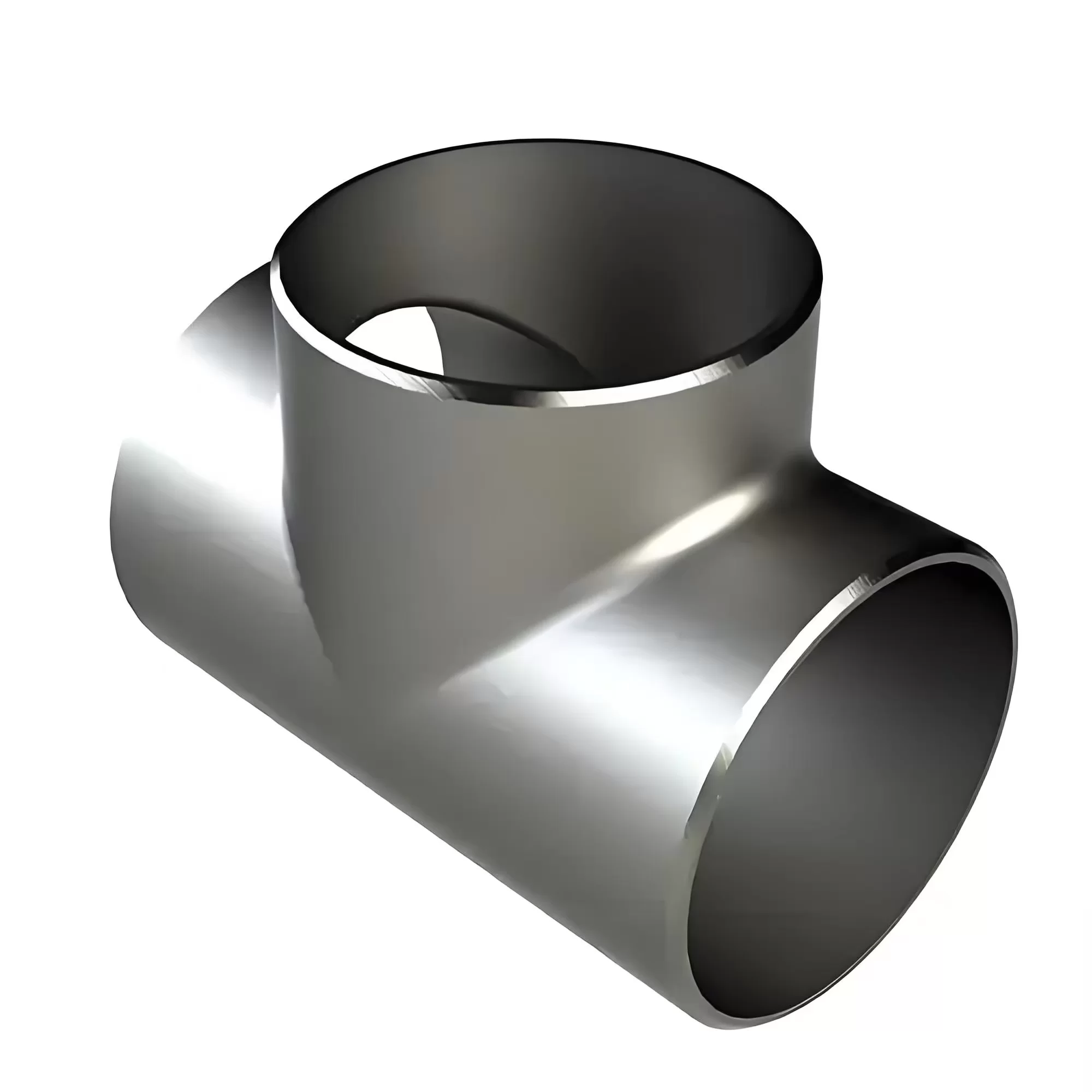
The Core Role Of The Tee In Pipeline Systems
In the complex architecture of modern pipeline systems—spanning petrochemical plants, municipal waterworks, HVAC networks, and power generation facilities—the tee fitting is arguably one of the most critical and universally employed components.

Jun 27,26
Guide to Standard 6 slip on flange dimensions and Standards
In the complex world of industrial piping, precision is the cornerstone of safety and efficiency. Understanding the technical specifics of piping components, such as 6 slip on flange dimensions, is essential for engineers and procurement specialists to ensure a perfect fit and leak-proof assembly in high-pressure environments. By adhering to strict dimensional standards, industries can minimize downtime and avoid catastrophic failures in critical fluid transport systems. The global demand for high-performance structural metal components continues to grow as energy infrastructure expands. The ability to accurately interpret and apply 6 slip on flange dimensions allows for seamless integration between different piping sections

May 01,26
Industrial Guide to Using the 3 inch threaded flange for Piping

Sep 28,26
China concentric reducer Technical Guide and Selection Standards
In complex piping networks, managing the transition between different pipe diameters is critical for maintaining system pressure and structural integrity. A concentric reducer serves as the engineered bridge between these sizes, ensuring that the centerlines of both the inlet and outlet remain perfectly aligned. This alignment is paramount in vertical piping systems where eccentric loading could lead to support failure or mechanical stress over time. For procurement managers and EPC contractors, sourcing a China concentric reducer requires a balance between strict adherence to international standards like ASME B16.9 and the optimization of landed costs.
Apr 06,26
Understanding the Critical Role of the 6 inch Threaded Flange in Industrial Applications
SUBSCRIBE NEWSLETTER