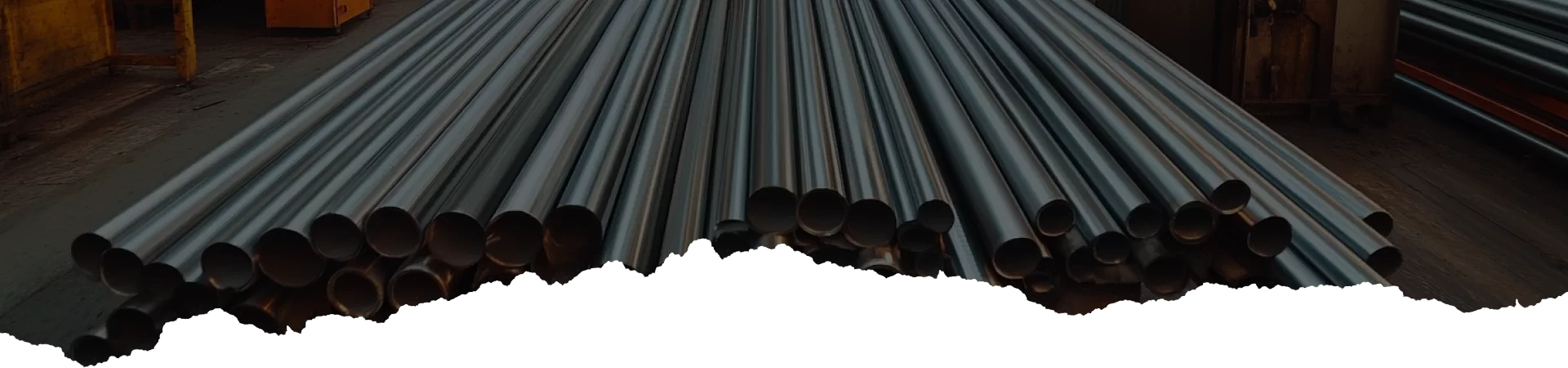


Source high-performance Eccentric Reducers from a leading China factory. Our expert suppliers deliver precision ASME B16.9 pipe fittings designed to prevent cavitation and gas trapping for oil, gas, and chemical industries globally.
The Industrial Eccentric Reducer is a precision-engineered pipe fitting specifically designed to connect pipelines of differing diameters while maintaining an offset centerline. Unlike concentric alternatives, its eccentric structure is critical for industrial systems where fluid dynamics and precise pipe positioning are paramount. This specialized fitting is widely deployed across high-stakes sectors, including oil and gas, chemical processing, water treatment, and power generation, to ensure seamless transitions and peak flow efficiency.
Engineered for extreme high-performance environments, our Eccentric Reducers serve two primary strategic functions: facilitating smooth fluid media transitions and eliminating hazardous accumulation. Depending on the installation requirements, "Concentric at Top" (COT) configurations are utilized to prevent gas trapping, while "Concentric at Bottom" (COB) designs eliminate liquid pooling. This precision engineering effectively prevents cavitation in pumps and significantly reduces the risk of water hammer in high-pressure steam systems.
| Manufacturing Standard | ANSI/ASME B16.9 Wrought Steel Fittings | Pressure Ratings | ASME B16.5 (Class 150 to 2500) |
|---|---|---|---|
| Size Range | DN15 (1/2") to DN1200 (48") | Wall Thickness | Sch 10, 20, 40, 80, 160, XXS |
| Carbon Steel | ASTM A234 WPB, A105, 20# | Stainless Steel | ASTM A403 304/304L, 316/316L, 321 |
| Alloy Materials | ASTM B366 Cr-Mo, Monel, Inconel, Titanium | Connection Types | Butt Weld (BW), Socket Weld (SW), NPT |
| Bevel Angle | 37.5° ± 2.5° (per ASME B16.25) | Eccentricity (e) | Calculated as (D - d) / 2 |
COB-type designs eliminate liquid accumulation at pump inlets, protecting critical equipment from destructive cavitation.
COT configurations prevent gas trapping at the pipeline top, ensuring uninterrupted and stable fluid conveyance.
Conical transition surfaces minimize eddy currents and turbulence, significantly reducing overall system energy loss.
Precision beveled ports ensure superior butt-welding strength, essential for high-pressure industrial applications.
Available in Carbon, Stainless, and Alloy steels to resist corrosion and withstand extreme temperature fluctuations.
Strict adherence to ASME and ANSI standards ensures global interoperability and rigorous safety certification.


Real-time tracking of sizes from DN15 to DN1200 to ensure rapid project deployment.
Strict dimensional inspection following ASME B16.9 to ensure zero-defect delivery.
Certified material traceability for ASTM A234 and A403 grade specifications.
Tailored eccentricity and length parameters for specialized petrochemical units.
Global shipping solutions for heavy-duty structural metal components.
Professional guidance on COT vs COB selection for pump inlet installations.
| Performance Metric | Standard Reducer | Eccentric Reducer |
|---|---|---|
| Air Pocket Risk | High (Trapping common) | Very Low (COT Optimized) |
| Pump Lifespan | Moderate (Cavitation risk) | Extended (COB Optimized) |
| Fluid Velocity | Variable/Turbulent | Stable/Controlled |
| Maintenance Cost | Higher (Due to vibration) | Lower (Reduced Water Hammer) |
| System Efficiency | Standard | High-Performance |
A concentric reducer shares the same centerline for both ends, whereas an eccentric reducer has an offset centerline. This offset allows one side to remain flat, which is critical for preventing gas pockets or liquid accumulation in horizontal pipelines.
A COB reducer should be used at pump suction inlets. By keeping the bottom flat, it prevents liquid from pooling at the bottom of the pipe, which eliminates the risk of cavitation and protects the pump's impeller.
For corrosive media, ASTM A403 Stainless Steel (304L or 316L) is highly recommended. For extreme conditions, we offer nickel-based alloys such as Inconel 600 or Monel 400.
Yes, our products are manufactured according to ANSI/ASME B16.9 for dimensions and ASME B16.25 for beveling, ensuring they meet international safety and quality benchmarks.
The eccentricity is calculated as e = (D - d) / 2, where 'D' is the outer diameter of the large end and 'd' is the outer diameter of the small end.
Absolutely. Our alloy steel options (ASTM B366 Cr-Mo) are specifically designed for high-temperature and high-pressure steam systems to prevent water hammer and vibration.

Oct 29,26
Threaded Pipe Flange FAQ: Specifications, Ordering and Support Questions

May 25,26
A welded tee is a pipe fitting designed to connect three sections of pipe together. It forms a T-shaped structure where one branch pipe joins the main run pipe at a 90-degree angle. Depending on the application, pressure level, material grade, and fabrication method, there are several different types of welded tees available in the market.

Sep 24,26
Global infrastructure investment continues to grow as countries expand energy networks, modernize industrial facilities, improve water transportation systems, and strengthen critical transportation infrastructure.

Aug 10,26
High Quality 8 threaded flange for Industrial Piping Systems
In the complex world of structural metal fabrication, selecting the right piping components is critical for ensuring the integrity of high-pressure systems. The use of an 8 threaded flange, or more specifically, a socket weld alternative for small-bore piping, represents a strategic choice in balancing leak prevention with installation efficiency. Understanding the nuances of these connections is essential for engineers aiming to optimize safety and performance in demanding industrial environments. Global industrial standards, such as ASME B16.5, provide the necessary framework to ensure that components like the 8 threaded flange meet rigorous safety and pressure requirements.

Jul 06,26
Guide to asme b16 47 series b slip on flange dimensions
Dec 02,25
Corrosion-Resistant Flanges For Chemical And Marine Industries
Flanges are indispensable components in piping systems, serving as the critical junctions that allow for connections, maintenance, and isolation of flow.
SUBSCRIBE NEWSLETTER


