

Factory-direct long radius (LR) elbow supplier from China — ASME B16.9 / EN 10253 compliant, ISO 9001 certified, with 37% average cost savings for international buyers of pipe network fittings.
🏭 Cangzhou Weihuan Pipeline Equipment Co., Ltd.
Factory-direct long radius (LR) elbow supplier from China — ASME B16.9 / EN 10253 compliant, ISO 9001 certified, with 37% average cost savings for international buyers of pipe network fittings.
Made for corporate purchasing managers, technical directors, and operations leaders who demand certified quality, traceable materials, and dependable delivery for oil & gas, chemical, water treatment, and power generation pipe networks.
If you are responsible for pipe network procurement, you already know the pain. Here are the five most expensive mistakes we see every day from international buyers.
Many buyers purchase from trading companies rather than the actual manufacturing plant. This added layer can inflate your total cost of ownership (TCO) by up to 35%. A 2025 industry analysis of global pipe fitting pricing shows that factory-direct sourcing eliminates this premium entirely.
Unauthorized substitution of steel grades — e.g., using ASTM A53 instead of specified ASTM A234 WPB — can lead to catastrophic failures. 38% of failed pipe components in a 2024 European study were traced back to incorrect material sourcing and poor end-to-end traceability.
Traditional European and North American mills are often back-ordered for a full quarter. One US-based project manager reported 14 weeks of downtime waiting for critical 90° LR elbows, costing $27,000 per week in lost production.
Missing EN 10204 3.1 material certificates, incorrect heat treatment logs, or inadequate test reports cause customs delays and project rework. 1 in 5 import shipments to the EU are held for documentation discrepancies, adding 1–3 weeks of storage fees.
In 2025, container freight rates from China to North America fluctuated between $1,800 and $4,200 per 40ft container. Without a supplier that offers consolidation and DDP terms, logistics become a guessing game.
Specifying a short radius (SR) elbow when a long radius (LR) bend is required creates higher pressure drops and accelerates erosion. In a confined network, the curvature radius directly affects flow efficiency and pump energy consumption by up to 18%.
As a China long bend manufacturer and platform-based supply chain enterprise, Cangzhou Weihuan Pipeline Equipment Co., Ltd. provides industrial-grade long radius bends, elbows, tees, reducers, and flanges at factory-direct prices — with complete material traceability and international certifications.
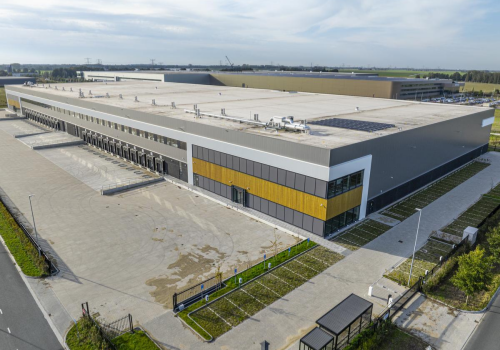
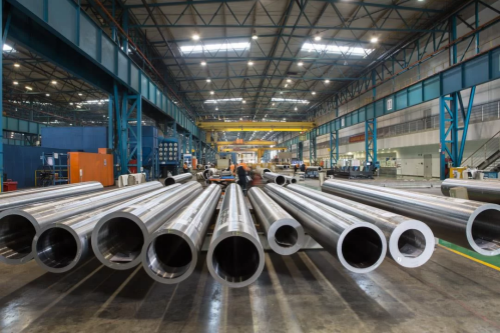
23,000+ m² of manufacturing capacity in Hebei Province, China, with 8 induction bending machines, 4 pressing lines, and 6 CNC machining centers. We consistently produce 400+ tons of pipe fittings per month.
Every buy long bend shipment includes full EN 10204 3.1/3.2 mill certificates, heat number traceability, and raw material test reports. We perform 100% dimensional inspection, and optional hydrostatic & X-ray testing at third-party labs.
15–20 days standard production lead time. 10-day express option on popular sizes. Consolidated sea freight to Houston, Rotterdam, and Montreal every three weeks.
Custom bend angles from 1° to 180°, modified wall thicknesses, special end preparations, and private labeling. Our engineering team has delivered 350+ custom designs for OEM clients across the US and Europe.
Flanges, steel pipe, three-way tees, pipe elbows, reducers, and malleable cast iron (MCI) fittings — all from one source. Reduce procurement administrative overhead by 31% by consolidating your supplier list.
Products meet ASME B16.9, ASME B16.28, EN 10253-4, DIN 2605, and GB/T 12459. Certified under ISO 9001, with CE, RoHS, UL, GS, and cUPC available for project-specific requirements.
🚀 Are you ready to reduce procurement costs and lead times? Our engineers respond to RFQs within 4 business hours. Request a quote now →
Below are the full engineering parameters for standalone long radius (LR) bends, the most common type of long bend for pipe networks. This configuration uses a centerline radius of 1.5D, which reduces pressure loss, lowers turbulence, and extends pipeline service life compared to short-radius elbows.
As outlined in the 2025 Performance Material Selection in Rigid Flange Coupling Systems framework, engineers must weigh mechanical properties, corrosion resistance, thermal stability, and cost. Over-specifying materials can inflate project budgets by up to 22%.
Pipe bends & elbows do not behave like straight pipe. When an external load is applied to one end of a pipe bend, the cross-section deforms significantly both in and out of its end plane. This “shell-type” behavior — characteristic of curved pipe geometries — is precisely what gives a long bend its greater flexibility.
Research using 3D elastic-plastic finite element analysis (FEA) (e.g., Elbow Stress Indices Using Finite Element Analysis, and the R6 Failure Assessment Diagram method) demonstrates that bends develop localized stress intensification through cross-sectional ovalization. This validates why 1.5D long radius bends are recommended in high-cycle and high-pressure systems: they reduce ovalization stress and increase fatigue life compared to 1D short-radius elbows.
📐 Note: Tolerances per ASME B16.9 — center-to-end: ±2 mm up to DN150, ±3 mm above. End O.D.: ±1.6 mm up to DN300.
A standard tee fitting provides a 90° branch from a main pipe line. A reducing tee accomplishes the same function with a smaller branch opening — eliminating the need for an additional reducer fitting. For safe design according to ASME B31 codes, sustained stress indices (SSI) at tee connections must be calculated to account for primary stress intensification.
A reducer (or reducer coupling) joins two pipes of different sizes, with a larger female thread on one end and a smaller one on the other. Combined with our range of flanges — for which optimized bolted flange joint design has been shown to significantly improve sealing performance — you can build complete, leak-tight pipe networks from one supplier.
From subsea oil & gas to pharmaceutical clean rooms, the long bend plays a critical role in maintaining flow efficiency, reducing pressure drop, and enabling thermal expansion accommodation. Here’s where a China long bend supplier adds the most value.
A Texas-based midstream operator needed 650 units of 90° LR bend, ASTM A234 WPB, Sch 80, DN200 for a new natural gas gathering line.
A German chemical plant required SS 316L long radius elbows with EN 10204 3.1 material certs, specifically for hydrochloric acid service. 120 pieces with passivated finish.
A Canadian mining contractor ordered WPHY 60 high-yield long bends for a high-pressure tailings slurry pipeline. 1,400 km from our port to Alberta, delivered on schedule.
When you buy long bend fittings from a China long bend supplier, compliance is non-negotiable. Here is the proof our partners rely on.




Product names, logos, and brands are property of their respective owners. All references are provided for identification purposes only — and are used with permission or under fair use.
A long bend (LR elbow) has a centerline radius equal to 1.5 times the nominal diameter (1.5D). A short bend (SR elbow) has a radius equal to the nominal diameter (1.0D). The long bend produces less pressure drop and turbulence, reduces pumping energy, and extends service life — making it ideal for high-pressure and high-flow pipe networks. Short bends are used only when space is extremely constrained.
We supply carbon steel (ASTM A234 WPB), stainless steel (ASTM A403 WP304/L, WP316/L), alloy steel (ASTM A234 WP1, WP11, WP22), and high-yield (WPHY 52–70). All materials come with mill test certificates and full heat traceability for international project compliance.
Our standard MOQ is 10 pieces for sizes up to DN200; for DN250 to DN600, the MOQ is 5 pieces. We also accept sample or trial orders (1–3 pieces) at a small premium so you can validate our quality before full-scale procurement.
Every batch is manufactured to strict dimensional standards. We perform 100% laser/O.D. caliper measurement, wall thickness ultrasonic testing, and end-center distance verification. A complete inspection report accompanies every shipment — with the option of a third-party inspector from SGS, BV, or TÜV on-site before loading.
We offer FOB (Tianjin or Qingdao), CFR/CIF, DAP, and DDP terms. For urgent projects, air freight is available for smaller lots. Our logistics team can also consolidate LCL (less-than-container-load) shipments to reduce per-cubic-meter costs — especially helpful for mixed orders that include flanges, tees, and reducers.
Yes. With 8 induction bending machines, we can produce any angle from 1° to 180° without additional tooling costs. We also accommodate special schedules (e.g., custom Sch 30 or Sch 60) and double-random lengths for connecting pipe spools.
We can provide ISO 9001, CE, RoHS, UL, GS, cUPC, and IPPC-compliant wooden packaging certificates. For the EU, we routinely supply EN 10204 3.1/3.2 certification and EU Declaration of Conformity. For the US, we support compliance with ASTM and ASME specification packages requested by engineering firms.
Standard products: 15–20 days from confirmation. Rush orders (popular sizes): 10–12 days. Custom engineered bends with heat treatment and X-ray testing: 25–30 days. We track every order with weekly photo reports so you can monitor progress remotely.
Verified feedback from procurement managers and technical directors who chose to buy long bend fittings and other pipe network products from our China long bend factory.

“We switched from a European distributor to Weihuan for our LR elbows and flanges. The cost saving was 37% on the same ASTM A234 WPB material with full 3.1 certs. Delivery was 21 days vs. our previous 8-week wait. Their engineering team also helped us confirm the correct Sch 80 spec for our gas line — very professional.”

“The 316L stainless steel long radius elbows we received were beyond expectations. The end surface finish was excellent, dimensional tolerances were well within ASME B16.9, and the EN 10204 3.1 documentation allowed our QA team to clear them for use immediately. We’ve added Weihuan to our approved vendor list.”

“We ordered WPHY 60 high-yield elbows for a high-pressure tailings pipeline. The components made a 14,000 km journey — sea, rail, and truck — and arrived in perfect condition. The packaging was clearly designed for rugged transport. Absolutely no complaints on quality or shipping timeline.”

“Very responsive team. Their consolidation service allowed us to mix long bend elbows with tees and flanges in a single container, reducing freight cost per unit by 22%. We saved over 300 hours of internal coordination time on a large water treatment project.”

“We had a behind-schedule offshore project, and their 10-day express option literally saved us from a €120,000 delay penalty. The long bend fittings met every spec in the project FAT (Factory Acceptance Test). Highly recommended procurement partner.”
“This was the first time our team purchased directly from a China long bend supplier. The transparent pricing model — clearly breaking down material cost, processing, heat treatment, and shipping — gave us confidence. They even provided weekly photo updates of our batch. We’ll be using them again.”
Real pre-sales and after-sales interactions with our engineers and sales team.
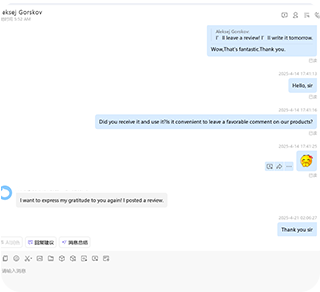


Get a custom quotation for long bends, elbows, tees, reducers, and flanges within 24 hours — backed by full datasheets and material certifications.

May 25,26
Common Materials Used in 90° Elbow Production and Their Advantages
In modern pipeline systems, the 90° elbow plays a critical role in changing flow direction while maintaining pressure integrity and operational efficiency. Whether used in oil and gas pipelines, chemical plants, water treatment facilities, or HVAC systems, selecting the right material for a 90-degree elbow directly affects durability, corrosion resistance, temperature tolerance, and overall service life.

Aug 21,26
Industrial Grade 1 1 4 Threaded Flange for Piping Systems
The selection of precision piping components is critical for maintaining the structural integrity and flow efficiency of industrial fluid systems. Among these, the 1 1 4 threaded flange serves as a fundamental connection point, ensuring leak-proof transitions in a variety of pressurized environments. Understanding the nuances of its design and application is essential for engineers aiming to minimize downtime and maximize operational safety. In the global manufacturing landscape, the demand for standardized yet high-performance fittings has led to the widespread adoption of specific threaded configurations. The 1 1 4 threaded flange addresses the need for a secure, mechanical joint

Sep 01,26
Comprehensive Guide to Accurate Slip On Flange Dimensions
Selecting the correct slip on flange dimensions is not merely a matter of following a chart; it is a critical engineering decision that determines the integrity of the entire piping joint. A discrepancy of just a few millimeters in the bore diameter can lead to weld failure or costly on-site rework, directly impacting project timelines and safety. For procurement managers and technical directors, the challenge lies in bridging the gap between theoretical ASME B16.5 standards and the actual manufacturing tolerances provided by global exporters. Ensuring that the outside diameter, bolt circle, and thickness align perfectly with mating equipment is the only way

Oct 01,26
High Performance China Long Bend Pipe Fittings Guide
In industrial piping, the transition of fluid direction is a critical engineering challenge where the choice between long and short radius bends determines the entire systems efficiency. A long radius LR bend, typically defined by a centerline radius of 1.5 times the nominal pipe diameter, is engineered to minimize turbulence and reduce the energy required for pumping. This technical guide examines the specifications, material requirements, and procurement strategies for sourcing high-performance pipe fittings. For procurement managers in the oil, gas, and chemical sectors, the primary objective is to balance total cost of ownership with strict adherence to safety standards

Jun 25,26
Industrial Guide to the 8 150 slip on flange for Piping Systems

Oct 10,26
Global investment in energy infrastructure, petrochemical facilities, power generation projects, and industrial transportation networks continues to expand. As industries seek greater operational efficiency and long-term reliability, engineers are paying increasing attention to the integrity of pipeline connection systems. While pumps, compressors, and valves often receive significant attention during project planning, the performance of a pipeline frequently depends on the quality of its connection components.
SUBSCRIBE NEWSLETTER